Blog

World Environment Day (5 June): a South African programme is changing how the tourism industry thinks about its impact

A South African-led initiative is redefining what it means to be a responsible traveller and it’s not about skipping the trip.

DURBAN, 1 June 2026:  With World Environment Day observance on June 5, tourism and travel will no doubt be top of the list of discussions around its impact on the environment and climate change. Down on the southern tip of Africa, a quiet yet significant shift is underway, changing how the tourism industry thinks about its impact

A pioneering pilot programme led by travel company kimkim, in partnership with the Wilderness Leadership School, ETC Africa, and The Eco Travel Boutique, is helping 25 South African tourism properties measure, understand, and reduce their carbon footprints and giving travellers the tools to make their trips count for more.

South Africa’s wild landscapes are doing more than they look like they’re doing. For example, the Kruger National Park alone, roughly the size of Wales, or the state of New Jersey stores hundreds of millions of tonnes of carbon in its soils, trees, and grasslands. These ecosystems are functioning climate infrastructure, and they depend on communities having a tangible economic reason to protect them. Ethical tourism, structured to channel real revenue into local employment and conservation, is one of the most effective tools for ensuring that reason exists. The question isn’t whether to visit, it’s whether your visit makes the place stronger.
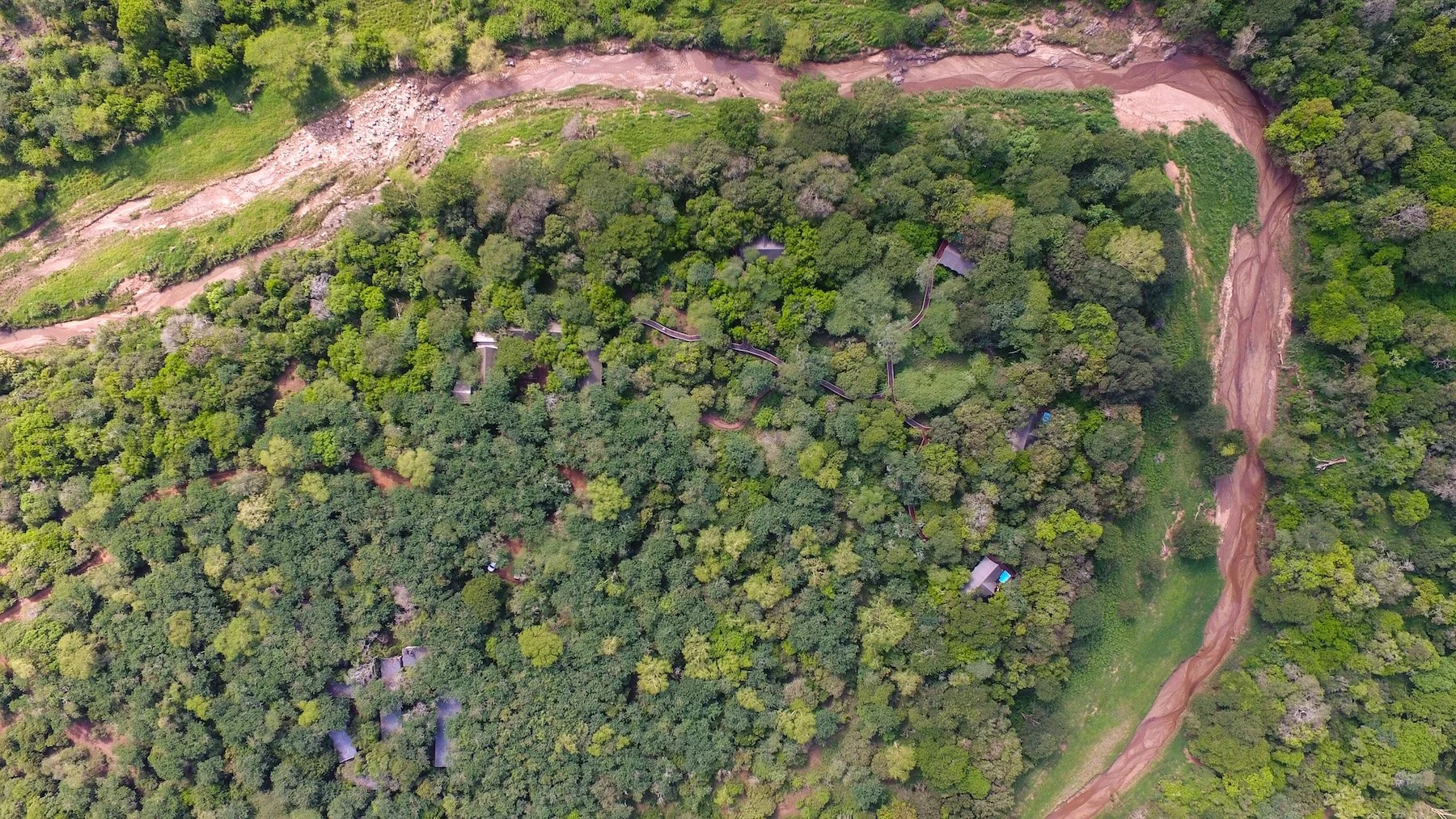
Rhino Sands: Nestled within pristine riverine forest and thoughtfully designed to minimize environmental impact, Rhino Sands blends into the natural landscape, offering an immersive wilderness experience while helping to protect the delicate ecosystems that make the African bush so extraordinary. Credit Rhino Sands

“The greatest environmental challenge isn’t travel it’s disconnection,” says Duncan Pritchard, Director of ETC Africa. “When guests witness wildlife, engage with local communities, or simply stand in a wild place, that’s when real conservation commitment takes root. Measuring a property’s carbon footprint gives that commitment a measurable backbone and the early data from this pilot has been revealing. Off-grid properties are achieving, on average, half the per-bed-night emissions of their on-grid equivalents. And across the programme, properties that actively measure and manage their footprint are seeing emissions reductions of more than 20%  not through radical overhaul, but through the simple discipline of paying attention.”

“Our goal with every traveller is to help them connect to the community and culture of their destination,” says Kaelyn Harris-Vincent, Brand Marketing at kimkim. “When tourism is done thoughtfully, it really can be a force for good. By year’s end, every participating property will carry Verified Impact branding  so travellers can see exactly what their stay is contributing to.” 

Programmes like this one can only do so much. The properties are doing the work, measuring, reducing, verifying. But the traveller is the other half of the equation. And the most impactful choices available to guests are often the least obvious ones.
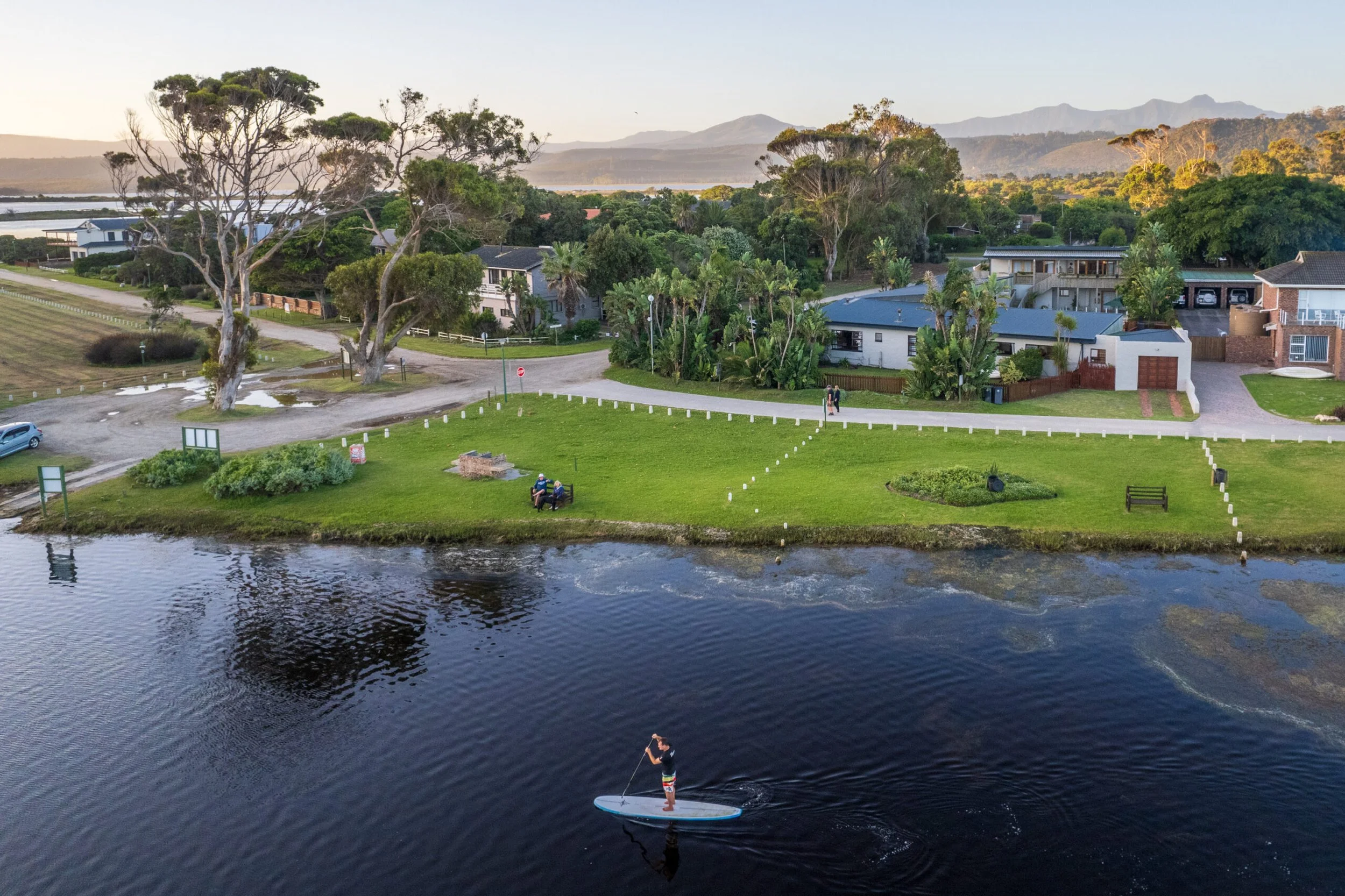
In Toto Retreat: At properties such as In Toto Retreat on the Garden Route, sustainability is embedded in everyday operations, where small, thoughtful decisions combine to create a measurable positive impact for both people and the planet. Credit In Toto Retreat

Eight Things Most Travellers Never Think to Do (But Should)

Beyond the basics, here’s what the most impactful travellers actually do differently:

1.    Ask where the food comes from. Food transport accounts for more than 10% of total greenhouse gas emissions at most remote safari properties. Ask whether produce is sourced locally and know that locally raised meat can have a lower carbon footprint than vegetables flown in from overseas. Local sourcing matters more than the type of food on the menu. Properties that can answer this question fluently are usually the ones worth staying with.
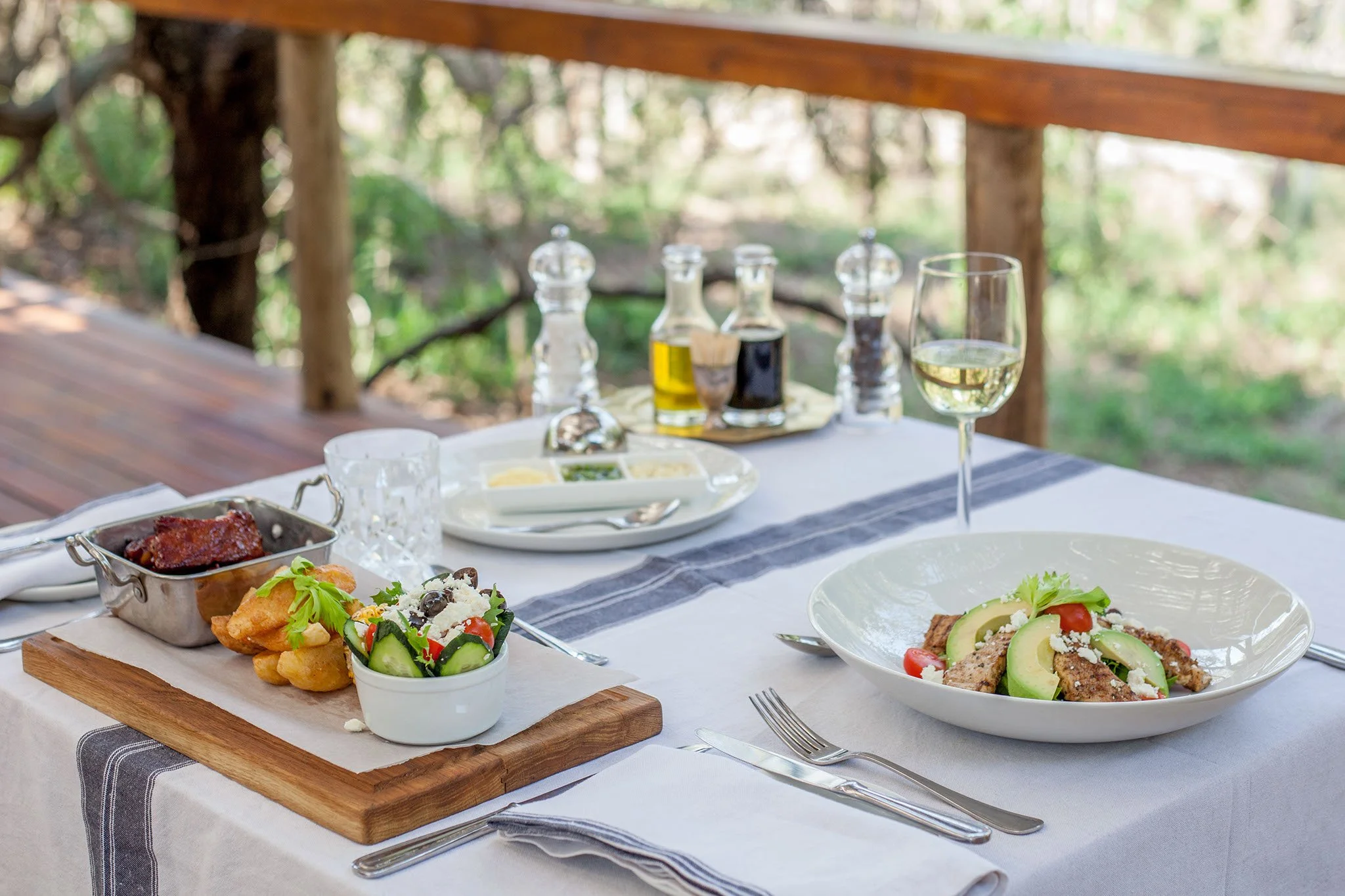
RHINO SANDS: LOCAL FOOD, LOWER FOOTPRINT: Choosing locally sourced food is one of the simplest ways travellers can reduce their environmental impact. Produce and ingredients grown or raised close to a destination require less transport, helping to lower emissions while supporting local farmers and communities. Photo Credit: Rhino Sands

2.    Skip the safari wardrobe. The fashion industry produces more carbon emissions annually than international aviation and shipping combined. Buying an entirely new wardrobe for a two-week trip, a habit that safari-outfit content has quietly normalised can rival the footprint of the flight itself. Pack what you have. Neutral tones are already in most wardrobes. The wildlife doesn’t care about the brand.

3.    Flag dietary requirements weeks before arrival, not at check-in. Remote safari camps often sit hours from the nearest town. A last-minute dietary request can mean a 200 km round trip for a single ingredient; unnecessary emissions, unnecessary cost, and a flustered kitchen. Tell them at booking. Good operators will be grateful; great ones already ask.

4.    Ask for a guide with roots in the area. A guide who grew up in or near the area brings a depth of knowledge that no training programme fully replicates,  the seasonal patterns, the local history, the sounds that don’t appear in field guides. Request one specifically. And when you tip, tip generously: that money enters a local economy directly.
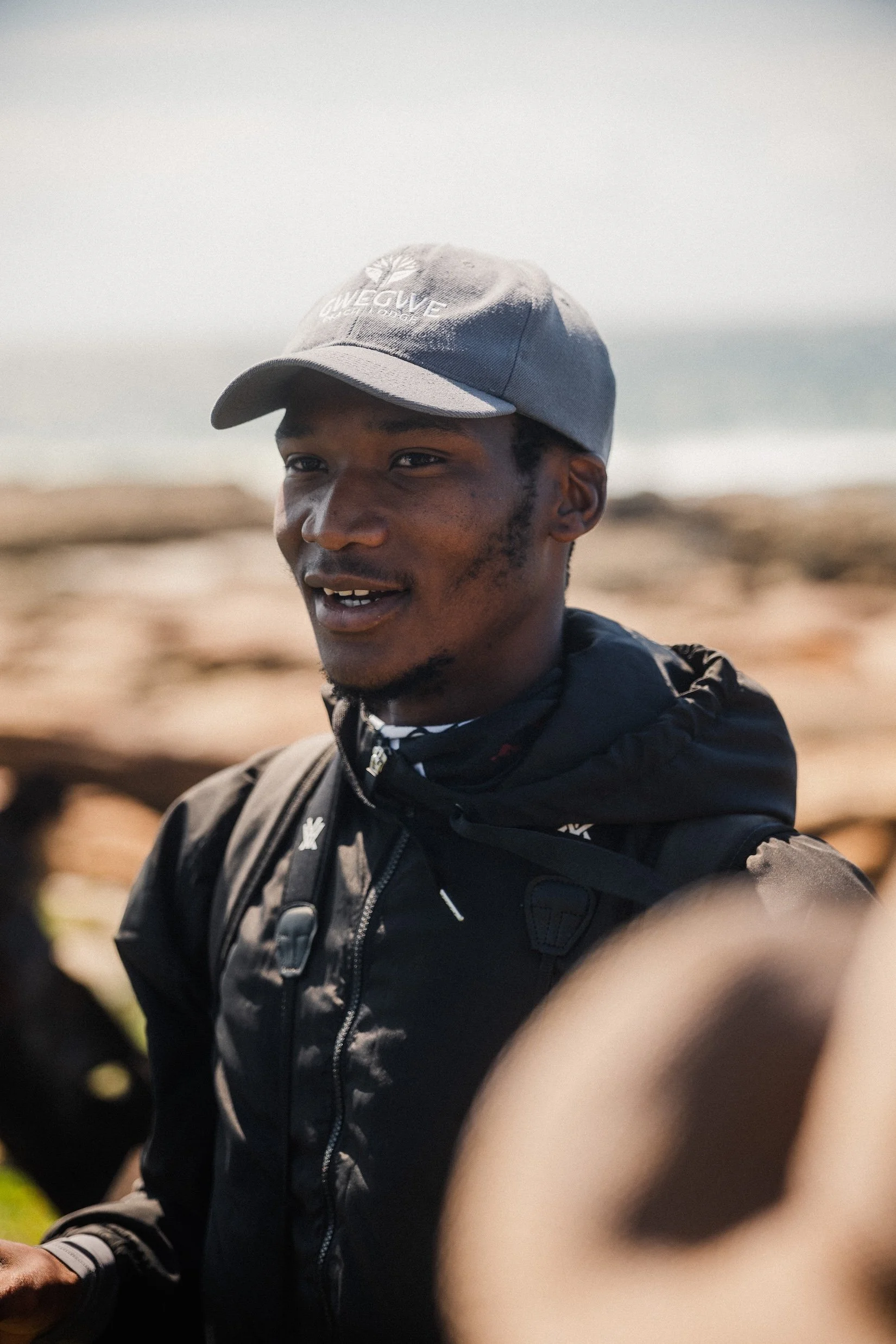
Gwegwe guide:  LOCAL KNOWLEDGE MATTERS
Guides who have grown up in or near a destination offer visitors unique insights into local culture, history and wildlife. Supporting local guides helps ensure tourism benefits communities directly and meaningfully. Pictured here is Asanda Phiwani, a local Pondo guide that shares his knowledge of the natural world as well as local history and culture at Gwegwe Beach Lodge. Photo credit: Gwegwe Beach Lodge

5.    Resist the urge to chase the next wildlife sighting. Game drive vehicles are typically the single largest source of carbon emissions at a safari lodge. Every unnecessary kilometre has a cost. More importantly, the guests who come home with the best stories are almost never the ones who ticked the most boxes, they’re the ones who sat at a waterhole for an hour, or followed a dung beetle across a road, or asked their guide to stop the vehicle and simply listen. Don’t push your guide to race between sightings or even better, request more walking safaris. The bush rewards patience in ways a highlight reel never captures.
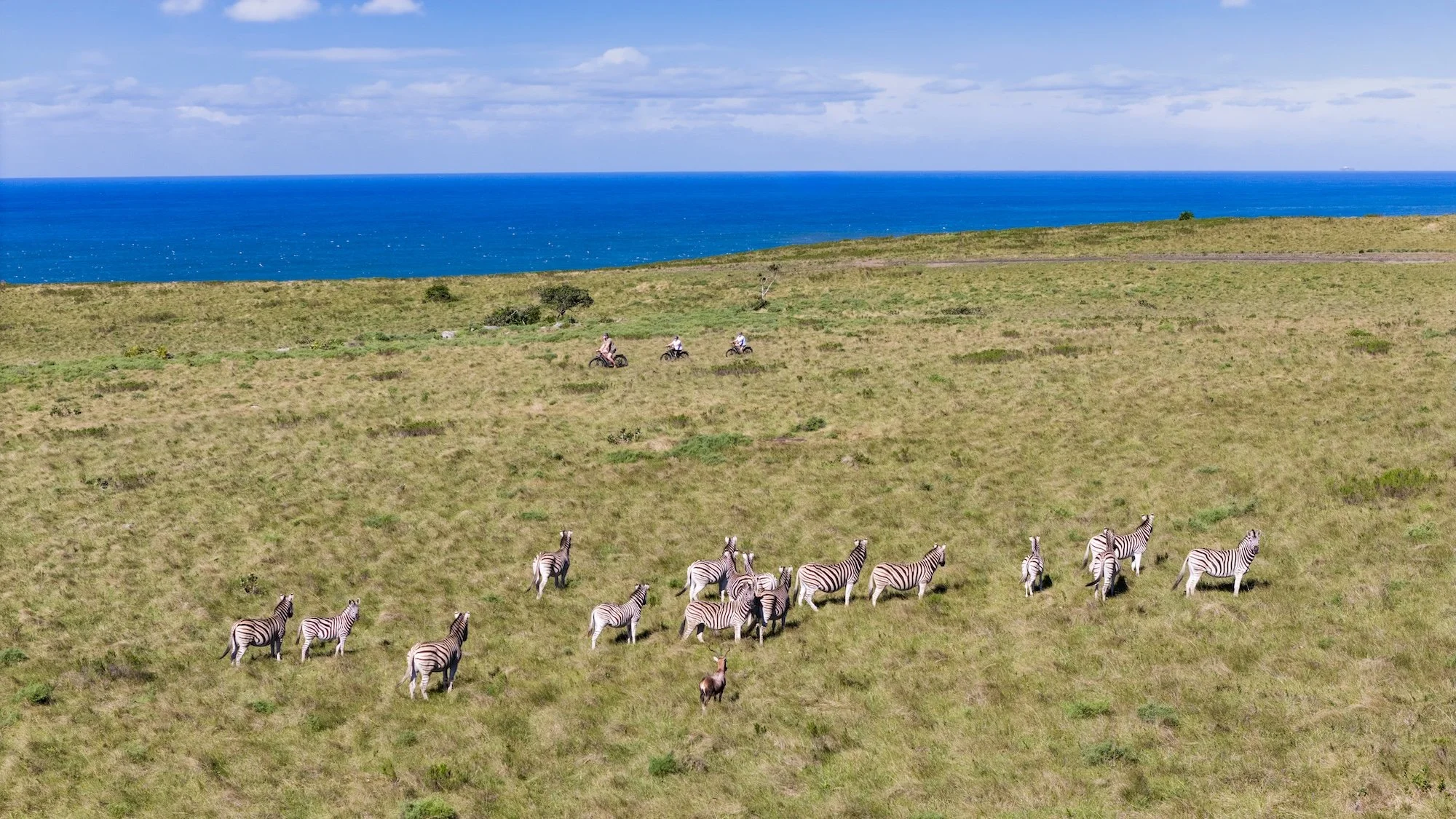
eBikes- a exhilarating alternative to game drives with zero fossil fuels. Photo Credit: GweGwe Beach Lodge

6.    Choose one longer trip over two short ones. The carbon cost of a long-haul flight is concentrated in take-off and landing. A two-week trip to Southern Africa carries a meaningfully lower emissions-per-day profile than two separate one-week visits. The experience is also categorically better, by day three, you’re no longer adjusting. You’re actually there.

7.    Ask about the property’s carbon programme before you arrive. Not every lodge that says ‘eco’ has done the work. Ask whether they track their emissions, whether those figures are independently verified, and what specific conservation projects your stay supports. Good properties will have real answers. Others will learn to.
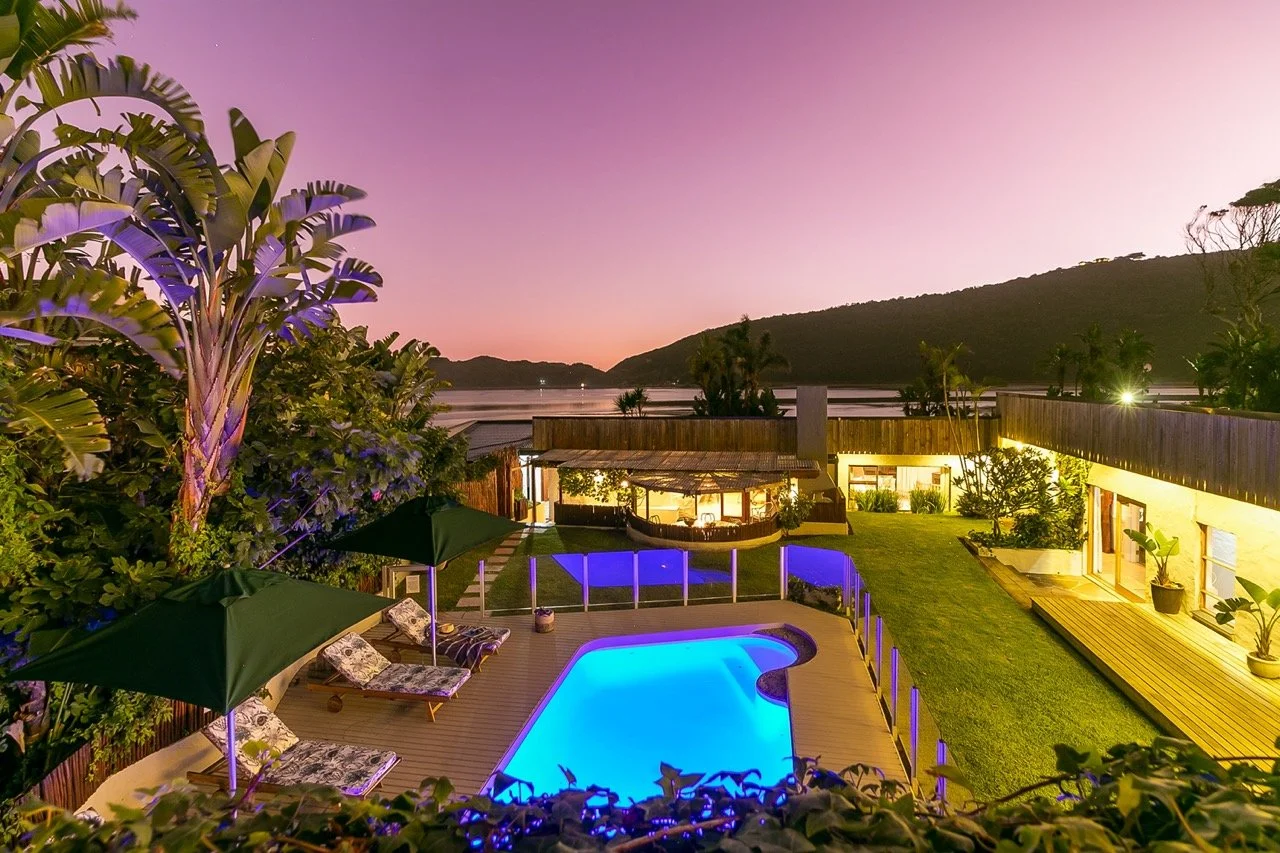
In Toto Retreat: At properties such as In Toto Retreat on the Garden Route, sustainability is embedded in everyday operations, where small, thoughtful decisions combine to create a measurable positive impact for both people and the planet.

8.    Ask how you can leave more than you took. The best lodges will have answers ready: an anti-poaching initiative you can contribute to, a community garden project, a rewilding programme that needs support. Ask anyway, even if they don’t. The questions travellers ask are one of the most underestimated forces in this industry. Properties pay attention to what guests care about. If you ask, they notice. If enough people ask, things change.

The kimkim Climate Action Pilot Programme is implemented through the Wilderness Leadership School, with technical expertise from ETC Africa and market access supported by The Eco Travel Boutique. By the end of 2026, all participating properties that complete the programme will carry Verified Impact branding, providing travellers with transparent, independently verified sustainability credentials.

Climate Communication: Creatives gathered in Cape Town to address the crisis 

Climate Story Lab ZA participants, mentors, and guest speakers gathered in Cape Town from 22 to 26 January to develop and amplify 9 creative projects that address the climate crisis.

This 4-day residential lab brought together creative leads from Zimbabwe, the Democratic Republic of Congo, Mozambique, and South Africa. The aim was to strengthen the potential of each project to reach and move a particular target audience. Over the course of the lab project leads got to present their work to a room full of key people engaged deeply in different aspects of climate crisis mitigation and adaptation work.

Vivian Chuene, Content Partnerships Manager at TikTok Africa

Projects included theatre, documentary film, podcast and virtual reality. Full details of these projects can be found on the CSL ZA website : https://climatestorylabza.org/wp-content/uploads/2022/12/cslza23-project-info-pack.pdf

Mentors at the Lab represented a diverse range of voices from various disciplines, areas of interest and expertise who are changing the way the world sees and engages with the climate crisis. 

Included in the line-up of experts and mentors were:

  • South African Human Rights and Environmental Activist Kumaran “Kumi” Naidoo, who served as Executive Director of Greenpeace International; and is a Special Advisor to the Green Economy Coalition and Senior Advisor for the Community Arts Network (CAN).

  • South African social justice activist Zackie Achmat, known for his activism in health, education, queer rights, spatial justice, commuter rail and recently energy / electricity.

  • Award-winning Kenyan impact producer Emily Wanja  who has worked with policymakers across national and county governments, private stakeholders, funders, civil society, and communities, using film as a tool for advocacy. 

  • South African science writer and author Leonie Joubert who focuses on environmental and social justice issues, climate and environmental collapse.

  • Lesotho-born Pascalinah Kabi, the author of Pollution, Profits and the People - an incendiary book that exposes the ugly reality of water mismanagement in Lesotho. 

  • Zimbabwean Kudzayi Ngwerume, formerly from Greenpeace, and now the Communications & Engagement Manager with the Urban Movement Innovation Fund (UMI Fund), who supported this lab. 

  • Professor Susan Levine,Head of the University of Cape Town’s Department of Anthropology, whose research spans visual and medical anthropology, with an interest in the role of the arts in health care settings. 

  • Vivian Chuene, Content Partnerships Manager at TikTok Africa, who supports partners and creators in Entertainment in the Southern African region. According to her the hashtag #ClimateChange has had more than 4.3 billion engagements, demonstrating people around the world are looking for climate stories.

  • Award-winning playwright, activist story-teller and co-founder of Empatheatre, Neil Coppen, who shared the 5-year journey of their theatre production  Lalela ulwandle, that has supported transformative governance of our oceans from community activations to Cop27 and engagements with United Nations agencies

  • Elaine Maane (Zambia), Regional Training Coordinator at STEPS, is responsible for programme development, regional network partner training and mentorship in using film as a tool for change. 

  • Nazeer Sonday (South Africa), a regenerative farmer, entrepreneur, social and environmental justice activist and chairman of the Philippi Horticultural Area Food & Farming Campaign.

  • Xoli Fuyani, a South African environmental education consultant and Founder of the Black Girls Rising NPO and Lisakhanya Mathiso a youth climate activist based in Cape Town and Communications Intern at 90by2030.

  • The well-known mobile solar cinema NPO Sunshine Cinema was represented by their Programmes Director Rene Weston, and Nontokozo Sibanyoni, a graduate of the UCT Sunshine Cinema Impact Facilitator online short course. 

“After spending three intense days in the same space with the creatives, activists and strategists I can tell you that these 9 projects are going to hit the target with audiences. It was a ‘1 + 1 = 3’ experience, where having everyone together in the same space elevated all the stories and distribution strategies,” says Dr Liani Maasdorp, CSL ZA co-director, impact consultant and UCT film lecturer.  “It can be exhausting and demoralising working in this field, constantly facing the devastating impacts of climate change and the ordinary people who are least responsible for generating harmful emissions. Hearing the stories of those who are generating climate adaptation and mitigation strategies from the African continent inspired us and re-invigorated everyone to continue their work with even more passion.”


The residential Climate Story Lab ZA is supported by the UMI Fund and hosted by the UCT Centre for Film and Media Studies in partnership with Doc Society and the Climate Story Unit.


For more information go to: https://climatestorylabza.org/


Green Corridors Receives Award from Plastics SA

Durban-based NPO Green Corridors, which cares for green spaces around the City, this week was awarded a Certificate of Appreciation by Plastics SA for its commitment and dedication to helping restore rivers and for protecting our waterways and natural environment.


Tri-ecotours founder and Green Corridors’ Litterboom Coordinator, Siphiwe Rakgabale (left photo) and Green Corridors’ Coastal and Waste Management Projects Officer Musawenkosi Shange (right photo) receive the Caroline Reid Award from Plastics SA’s Director of Sustainability Douw Steyn, on behalf of Green Corridors for its commitment and dedication to helping restore rivers and for protecting our waterways and natural environment.

The Caroline Reid Award was presented to Green Corridors’ Coastal and Waste Management Projects Officer Musawenkosi Shange, who works with the NPO’s Green Spaces programme, and Tri-ecotours founder and Green Corridors’ Litterboom Coordinator, Siphiwe Rakgabale.

Caroline Reid was an ocean conservation warrior who coordinated hundreds of beach and diving clean-ups, was central in the work done with the loss of plastic pellets (nurdles) in the Durban Harbour in 2017 and with her networking skills, increased the awareness of plastic pollution on the KwaZulu-Natal Coastline.

Green Corridors has a vision to provide solutions and support for cleaning of natural environments, ensuring waste is recycled, repurposed, or removed, and that communities within these areas are significantly involved.  

“We would like to thank Plastics SA for this recognition as we continue to carry on the legacy of Caroline Reid,” says Musawenkosi Shange. “The work we do is very much in collaboration with a number of partner organisations and stakeholders including Adopt-a-River, WESSA, and Umgeni Estuary Conservancy, DUCT’s Amanzi Eyethu Nobuntu programme, the eThekwini Municipality’s Solid Waste and Parks Department, with support from sponsors such as SAPRIPOL and PETCO.”

“We hope that the work we do in restoring and cleaning riverways helps to create improved natural spaces for people to connect with nature, and the planet and improve their quality of life,” says Siphiwe Rakgabale.

For more information about Green Corridors visit https://durbangreencorridor.co.za

For more information about Plastics SA visit https://www.plasticsinfo.co.za/

 -ends

CAPTION TO COVER PIC by VAL ADAMSON

Siphiwe Rakgabale (litter-boom and clean up co-ordinator Green Corridors) (left) and Musawenkosi Shange (Green Corridors’ Coastal and Waste Management Projects Officer) (right) pictured here with Green Corridors' partners Margaret Burger (WESSA and Umgeni Estuary Conservancy) and Teboho Kikine (Adopt-a-River). They received the Caroline Reid Award from Plastics SA’s Director of Sustainability Douw Steyn, on behalf of Green Corridors for its commitment and dedication to helping restore rivers and for protecting our waterways and natural environment.


African Insight Launches New Operation on Pongola Game Reserve, KZN, South Africa

African Insight Launches New Operation on Pongola Game Reserve, KZN, South Africa

African Insight, one of the continent’s leading  providers of inspirational, educational and empowering conservation programmes has announced that it has extended its site offerings for groups to the White Elephant Lodge on Pongola Game Reserve in northern KwaZulu-Natal, South Africa.

African Insight has been providing academic field trips and youth development programmes to universities, colleges and schools for over 20 years.  Destinations include Kruger National Park, Blyde River Canyon, KZN Drakensberg Mountains and Greater St. Lucia Wetland Park.

“In 2013 we were contracted to train 16 community members in hospitality and through this process were able to further develop our  unique brand of academic tourism on the community-owned Somkhanda Game Reserve in the Zululand region in KwaZulu-Natal,” explains Andrew Anderson, MD of Africa Insight.  

Anderson explains that “this led to the establishment of the African Insight Academy on Somkhanda with the vision to Inspire, Educate and Empower future global environmental custodians locally and abroad.  The facilities developed on Somkhanda include two safari style tented student camps that can accommodate 20 and 30 students respectively and a rustic “sleep out” camp.”

At the end of October 2018, the contract expired, and the hospitality side of the operation was handed back to Somkhanda’s management company.  African Insight Academy continues to operate on Somkhanda as a venue for its highly successful academic and youth development programmes whilst looking for new venues to accommodate the growing demand.

“The market for additional capacity to accommodate groups led us to talks with the owners of Pongola Game Reserve’s White Elephant operation, who loved the idea and they have now established  a new 30 bed facility for groups which was launched in January 2019,” says Anderson.

“Our African Insight Academy on Somkhanda and now on Pongola provides practical field experience in wildlife behaviour and management exposing students to a variety of research, monitoring and conservation programmes and community engagement.”

“Conservation and wildlife tourism that does not embrace the surrounding local community is unsustainable,” continues Anderson. “It is because of this that we have been actively involved in building sustainable socio-economic bridges between Somkhanda and the community resulting in the established of several programmes, such as cattle dipping, early childhood development and authentic homestays.  These programmes provide real support to the community whilst offering students an educational insight into contemporary traditional cultural and social-political issues. These same principles will be applied in the development of the site at Pongola.”

“We have had a phenomenal response over the years to these programmes, which has led to the need for more sites,” says Anderson. “And of course, there is nothing quite like an authentic African bush experience to capture the hearts and minds of our future conservationists, scientists and the like.”

The University of Roehampton in the UK has had a decade long partnership with African Insight Academy: with the two institutions working together to deliver the module Conservation. People, and Wildlife: South Africa Field Course to final year undergraduate students of anthropology, biology and zoology.  Prof Garry Marvin, Professor of Anthropology at the University, has seen the positive impact these trips have had on them and the university, saying “the close engagement that our students, through the field trips, have with the complex issues of conservation in situ, offers a rich educational experience beyond that which they would have from only reading the academic literature on conservation.”

Dr Heinz Kohrs, owner of White Elephant Lodge is excited to partner with the African Insight Academy on Pongola Game Reserve and looks forward to “being part of this important initiative that is having a positive impact on the next generation of global citizens and environmental custodians”.

For more information about the bespoke educational, development and academic programmes created by African Insight Academy , contact andrew@africanInsight.co.za or go to www.africaninsight.co.za


-ends


Media enquiries:

Andrew Anderson

MD African Insight Academy

Email:  andrew@africanInsight.co.za

Mobile:


Facebook:                                          https://www.facebook.com/africaninsightacademy/

                                                            https://www.facebook.com/AfricanInsight/


Eco-film about controversial titanium mining to co-premiere at Encounters International Documentary- and the Durban International Film Festivals

The Shore Break, an award-winning film that unpacks the dilemma faced by a rural community on South Africa’s Wild Coast as to whether to support or resist a proposed titanium mining project that could fundamentally change their lives forever, will have its South African co-premiere at the Encounters International Documentary Film Festival in June and at the Durban International Film Festival in July.

Directed by Ryley Grunenwald, The Shore Break was a selected project at the 2012 Durban FilmMart, the IDFA WorldView Summer School 2013, the Hot Docs Forum 2012 and the Hot Docs Dealmakers 2013. It is co-produced by two South African companies, Grunenwald’s Johannebsurg-based Marie-Vérité Films and Odette Geldenhuys’ Cape Town-based frank films. It was in competition at the recent International Documentary Film Festival Amsterdam (IDFA), and was named the Best Feature Length Documentary at the 2015 International Environmental Film Festival (FIFE) in Paris.

In the Amadiba area, in the heart of the breathtakingly beautiful Wild Coast, the Pondo people have tended their traditional way of life for centuries. A proposed titanium mine and the government’s controversial plan to build a highway across this ancestral ground, has polarized the community with those that see it as the beginning of the destruction of a way of life, and others who see it as a beacon of economic hope for the region.

Nonhle Mbuthuma, a young local eco-tour guide, is a staunch supporter of her people and the endangered environment on which their livelihood and culture depends. She wants to develop eco-tourism in order to protect her community’s homes, farms, graves and traditional lifestyle. Her cousin Zamille “Madiba” Qunya, a local entrepreneur and self-proclaimed modernizer, is fully supportive of the proposed mining operations and highway construction. Tired of his community living in poverty, Madiba scurrilously courts private capital and questionable government officials. While the South African President deposes the pro-environment Pondo Royal Family, Nonhle rallies support with little more than dogged determination.

“South Africa’s Wild Coast is my favourite place in the world – it has a rugged, mysterious beauty, and our family has been visiting there for years. When I heard about the proposed mining and toll road through the area, I could only imagine the extent of the environmental destruction of this pristine area,” says Grunenwald. “I met Nonhle Mbuthuma, who is a leader in her community, on one of my trips there. When I found out her arch enemy in favour of the developments was her own cousin and that the South African Government had dethroned her environmentally-conscious King Mpondombini Sigcau, it felt like something out of Shakespeare. I had to make a film about it.”

“In the early stages of filming I was only aware of how the titanium mine and highway threatened whatever was in their pathway,” explains Grunenwald. “However spending time with Madiba definitely made me see things from a broader perspective. He pointed out things that I couldn’t deny: the Wild Coast’s dire need for more schools, hospitals and employment. He believed large-scale development is the only hope for change. On the other hand Nonhle wanted development that would last longer than the 25-year lifespan of the mine. She believed alternative development such as expansive eco-tourism could develop the area without their having to give up their land and livelihood. Throughout production I kept changing my mind as to who was more ‘right’ about the development of the Wild Coast. The complexity intrigued me and I wanted to allow the audience to see things from both sides.”

It is very easy for urban middle class people to want to protect the environment when its preservation does not impair their own access to necessary facilities,” says Grunenwald. “However rural people should not have to give up their land and livelihood in order to access basic services and opportunities. I was struck by the amaMpondo's connection to their land and their determination to protect it for future generations no matter what the cost. They are willing to die for it. We hope The Shore Break will be seen by a wide audience - not only to entertain but to raise awareness of what's going on and to stimulate debate about the development of our most picturesque coastline.”

Co-producer Geldenhuys, a public interest and human rights lawyer, says “I am very interested in what is development? How is it defined? Who defines? By being structured around the drama of a family feud, The Shore Break manages to ask this question in a non-academic way, but in a manner that ordinary people can relate to.”

Exquisitely filmed with arresting cinematography, The Shore Break is edited by Kerryn Assaizky, with original traditional cross-over music by local musician Ntombe Thongo, and sand animation by award-winning animator Justine Puren-Calverley. The almost Kentridgesque animation links sections and propositions in the film, subtly providing context and silent commentary, creating opportunities for the audience to reflect and muse.

The Shore Break has been selected by Bertha BRITDOC Connect Fund to use the film for outreach. The film will have free screenings in the affected area, with decision makers as well as other communities facing similar development struggles. “We’re regularly partnering with more NGOs who want to use The Shore Break in their work around development, community engagement, and extractive industries, “ says Grunenwald.

The film has been made possible by the South African government’s DTI Film Rebate Scheme, a public sector initiative which is ensuring that South African films, including The Shore Break are reaching exhibition. Other funders include Ford Foundation, National Film and Video Foundation, Knowledge Network, Heinrich Böll Foundation, Gauteng Film Commission, Worldview, Alter Cine Foundation, and the Hot Docs Blue Ice Film Fund.

The film will screen at Encounters International Documentary Film Festival in Cape Town during 4 to 14 June 2015 and at the Durban International Film Festival which takes place from July 16 to 26, 2015. It will also screen at the Sydney International Film Festival during June 2015; and has already been screened at the Festival Millennium 2015, Belgium, and Hot Docs 2015 in Canada.

For more information go to www.theshorebreakmovie.com

Trailer: http://vimeo.com/102621491

Facebook: http://www.facebook.com/theshorebreakmovie

Twitter: http://twitter.com/theshorebreak

 -ends

 Captions to photos attached embedded in the JPG files. There are more pics available and these are also available in higher resolution.

Digital stills, EPK and links to articles and reviews are available online: http://theshorebreakmovie.com/press/