Blog

Acts of Care: Immersive Exhibition Brings Township AIDS Project Archive to Life

A new immersive exhibition is set to transform decades-old archival material into a living, participatory experience, inviting audiences to witness, recognise, and actively continue a legacy of queer community care that began in Soweto, Johannesburg, more than three decades ago.

Acts of Care is an Extended Reality (XR) exhibition drawing on archive material from the Township AIDS Project (TAP), held by the GALA Queer Archive. Using virtual reality, augmented reality, and an interactive creative public space, the exhibition explores how communities in early 1990s Johannesburg and Soweto organised care, education, and advocacy in response to the HIV/AIDS crisis, at a time when the disease was poorly understood, deeply stigmatised, and often framed as a moral or political threat.
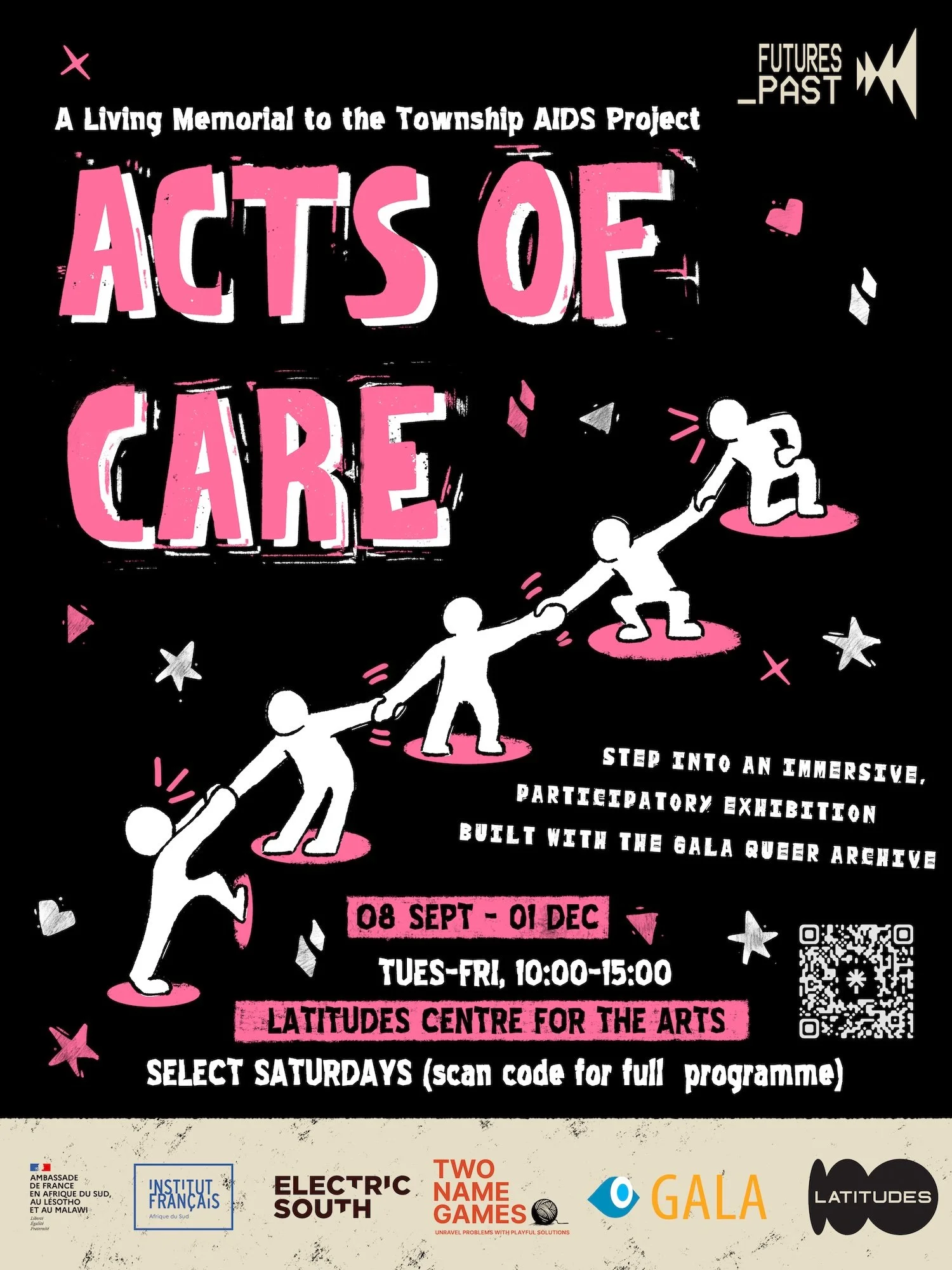
Acts of Care Poster 2026

Acts of Care will be launched on 5 September at the Latitudes Centre for the Arts (LCA) Shepstone Gardens in Johannesburg. It is one of the projects in Futures_Past: Amplifying Memory with Immersive Technologies, an initiative of the Embassy of France in South Africa, Lesotho and Malawi and the French Institute of South Africa (IFAS), in partnership with Electric South, with funding from the French Ministry for Europe and Foreign Affairs.

Structured in three interconnected experiential zones representing the past, present, and future, that map directly into the Acts of Care visitor’s journey and experience of Caring (Witness), Loving (Recognise), and Sharing (Act). Each zone marks a different type of engagement, carrying visitors from an intimate historical encounter, through recognition and affirmation, to collective and public participation.

The first station places visitors inside a VR reconstruction of an early 1990s community counselling room in Johannesburg, narrated by Enea Motaung, who ran TAP for many years. The scene draws on lived testimony to portray the quiet, often invisible acts of care that sustained communities during the crisis.
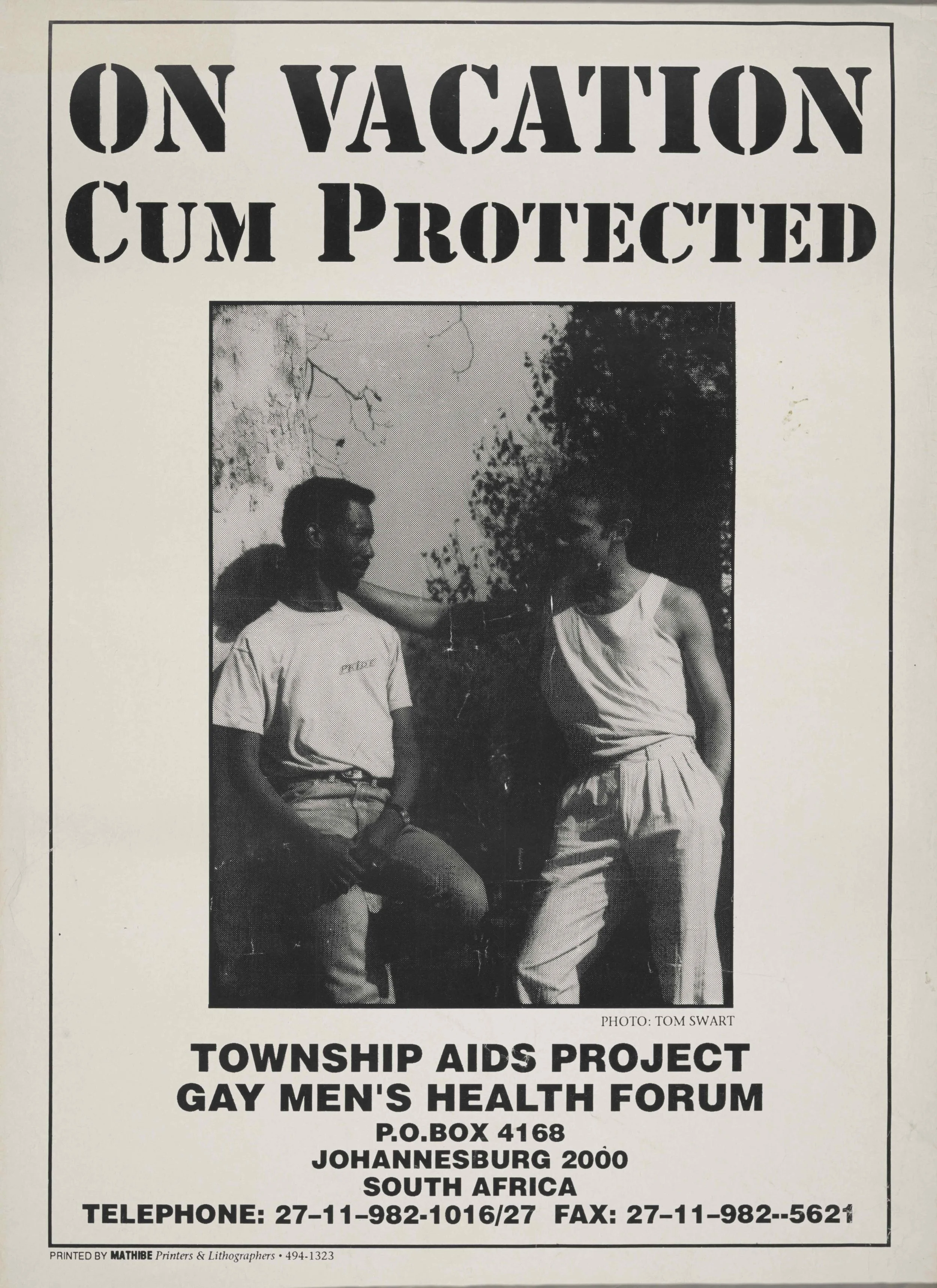
Poster from TAP archives.

The second station is a playful, full-body AR photo experience, drawing on the bold safe-sex campaign typography and graphic aesthetics of 1990s queer activist culture, allowing visitors to see themselves reflected within the visual language of the movement. Participants can pose, move, and experiment with identity in joyful and unapologetic space. This station connects past activism to present-day self-expression and collective visibility.

At the third station, visitors are invited to design their own posters, physically or digitally, using visual assets from the TAP and GALA archive. Completed works are pasted and projected onto a growing shared wall, forming a living, evolving archive of contemporary care and advocacy that builds throughout the exhibition's run.
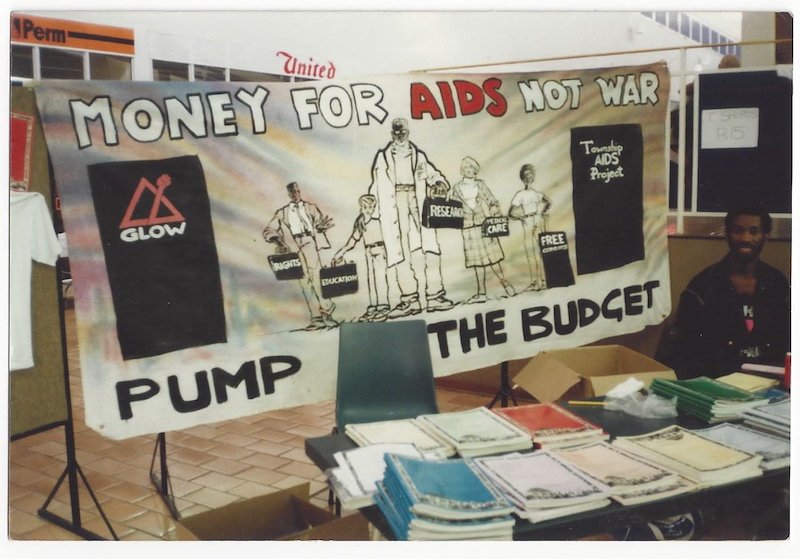
Archival photo of TAP outreach.

Throughout, archival photographs, pamphlets, and testimonies from TAP and the GALA Queer Archive connect the three stations, grounding the experience in lived history.

"TAP's story has lived in our collection for almost three decades, known mostly to researchers and those who lived through the HIV/AIDS crisis. Acts of Care gives us the chance to bring that history out into the open, to let new audiences encounter it not as a static record but as something they can step into and feel. This is what it means for an archive to stay alive,” says Linda Chernis, Archivist, GALA Queer Archive.

"We didn't want to simply document TAP's history, we wanted people to feel what it meant to organise care under pressure, without a manual, without institutional support, and often without the language to name what was happening,” says  Kieran Reid, Artistic Project Lead. “Building this in VR and AR helped us to hold onto that intimacy while still inviting people into something collective and hopeful, and creative."
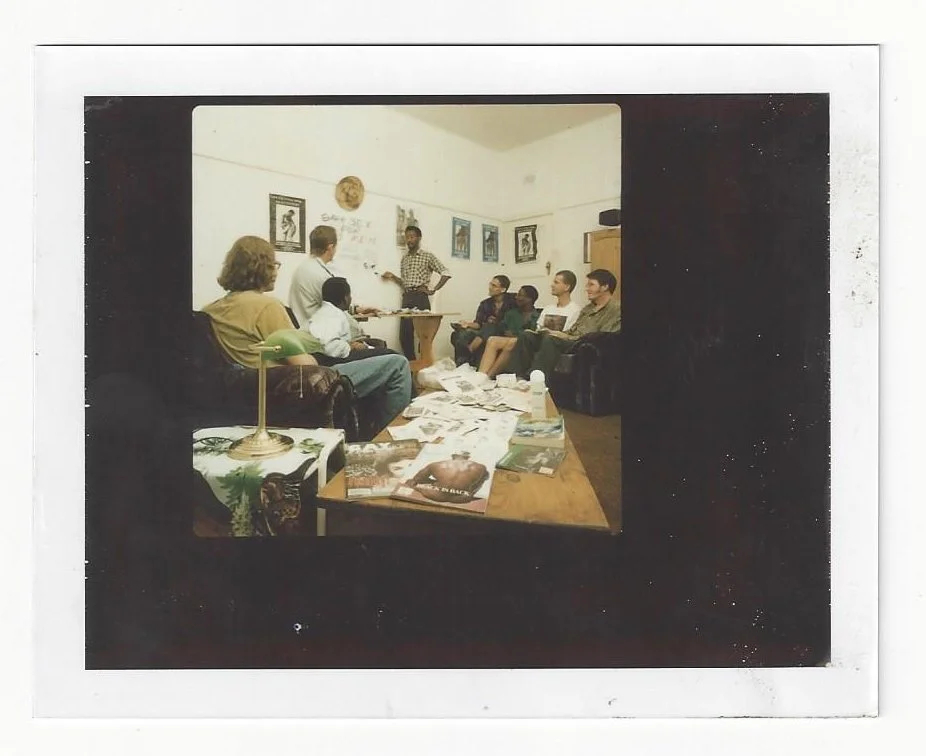
Simon Nkoli, Township Aids Project activist, in a workshop

The exhibition draws a deliberate line between the past and the present. As international HIV/AIDS funding, including support previously channelled through PEPFAR (the U.S. President's Emergency Plan for AIDS Relief) faces cuts that are currently affecting clinics, community health workers, and prevention programmes across South Africa, Acts of Care insists that the community-led practices of care pioneered by TAP in the 1990s remain relevant today.

“Futures_Past set out to show that archives are living resources, not just repositories of the past. Acts of Care embodies that mission entirely, taking a story of care and queer resilience from the 1990s and giving it new urgency at a moment when the very systems of care it documents are once again under threat,” says Jean Spiri, Director of IFAS.
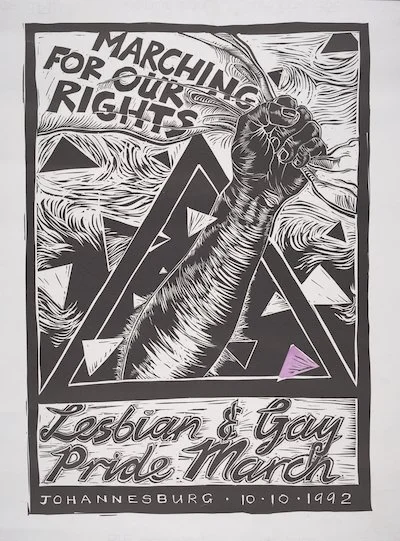
Archival poster for Pride March 1992

Acts of Care is designed to engage queer communities, HIV/AIDS activists, and health workers, as well as students, researchers, and general public audiences. It runs until 1 December 2026 (World AIDS Day) at Latitudes Centre for the Arts (LCA) in Johannesburg. Parental guidance: the exhibition has an age recommendation of 16+.

In response to and alongside Acts of Care, LCA is proud to present How is a triangle the strongest shape?curated by Denzo Nyathi,This group exhibition ponders the methodologies of endurance associated with resistance, taking a particular look at the height of the HIV/AIDS crisis in South Africa. Ephemera and other crafty practices are re-examined and brought to the forefront of fine art, with a queer cohort of artists — Talia Ramkilawan, Athi Patra Ruga and Sizwe Sama — practising their own forms of resistance. Exhibition details:

Venue: Latitudes Centre for the Arts, 12 Hope Rd, Mountain View, Johannesburg

Dates: 5 September to 1 December 2026 

Opening times: Weekdays, Tuesday to Friday, 10:00 - 15:00, &

 Select Saturdays (26 Sept, 31 Oct, & 28 Nov), 10h00-13h00

Programming for selected Saturday openings: https://twonamegames.com/actsofcare/ 

Instagram: @actsofcare_sa

Book here
When archives speak: Immersive exhibitions bring Southern African histories to life

What happens when archives are no longer silent, static, or locked behind glass, but can be walked through, listened to, and felt? From September to December 2026, audiences across South Africa, Lesotho, and Malawi will encounter a series of groundbreaking immersive exhibitions, transforming archival collections into living, interactive experiences.

Futures_Past: Amplifying Memory with Immersive Technologies is a collaborative initiative organized by the French Institute of South Africa (IFAS) in partnership with Electric South and local cultural institutions, archives, and international collaborators. Supported by the Embassy of France in South Africa, Lesotho, and Malawi, and funded by the French Ministry for Europe and Foreign Affairs, the project runs from July 2025 to March 2027.

Following an open call, the project brings together artist teams based in the countries of six selected archives. Over the next eight months, these teams will work closely with archives to co-create immersive digital works that explore and illuminate the stories contained within historical collections using virtual and augmented reality, spatial audio, and interactive installations. The resulting experiences will be presented in exhibitions across South Africa, Lesotho, and Malawi from September to December 2026.

“Across Southern Africa, archives hold collections of profound historical and cultural value, yet many struggle to reach new audiences,” says Jean Spiri, Director of IFAS. “Futures_Past creates space for collaboration between custodians of memory and immersive artists, allowing these collections to be approached with care, technical skill, and contemporary relevance.”

Selected artist–archive collaborations:

!Khwa ttu San Culture & Education Centre — Yzerfontein, South Africa
Linocuts, exile, and San cosmology
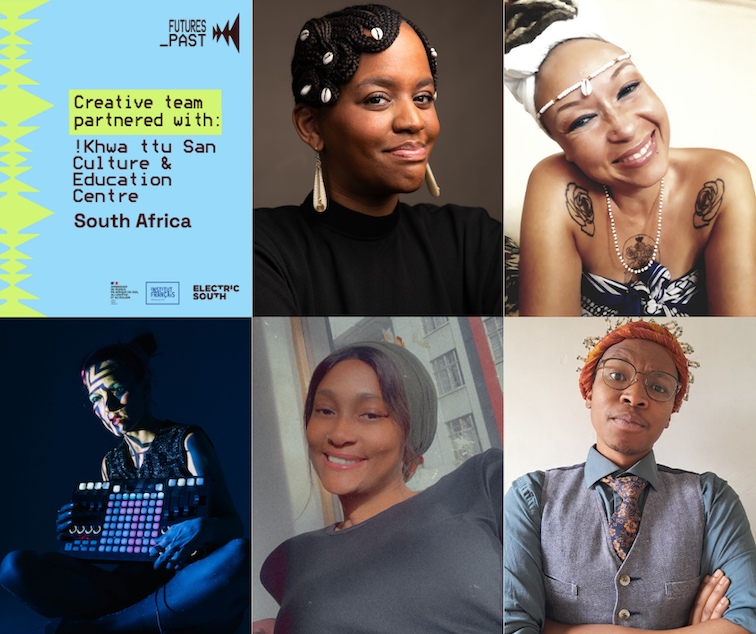
!Khwa ttu holds over 600 linocuts by !Xun and Khwe artists affected by displacement linked to the South African Border War. The selected creative team will work with the collection and with community members to explore ways of bringing these linocuts into an immersive, multi-sensory spatial experience. Through processes of community co-creation, the work will foreground lived histories, memory, and San cosmologies, using light, sound, voice, and sculptural elements to activate the linocuts in three-dimensional space. Artist team: Indigene Corefio Harris (N!hunkxa); Faye Victoria Katiiti Khakasa Kabali-Kagwa; Inka Kendzia; Thando Mthembu; Xabiso Vili

Top row (L-R): Faye Kabali-Kagwa, Indigene Corefio Harris Bottom row (L-R): Inka Kendzia, Thando Mtembu, Xabiso Vili

GALA Queer Archive — Johannesburg, South Africa
Activism, care, and HIV/AIDS history
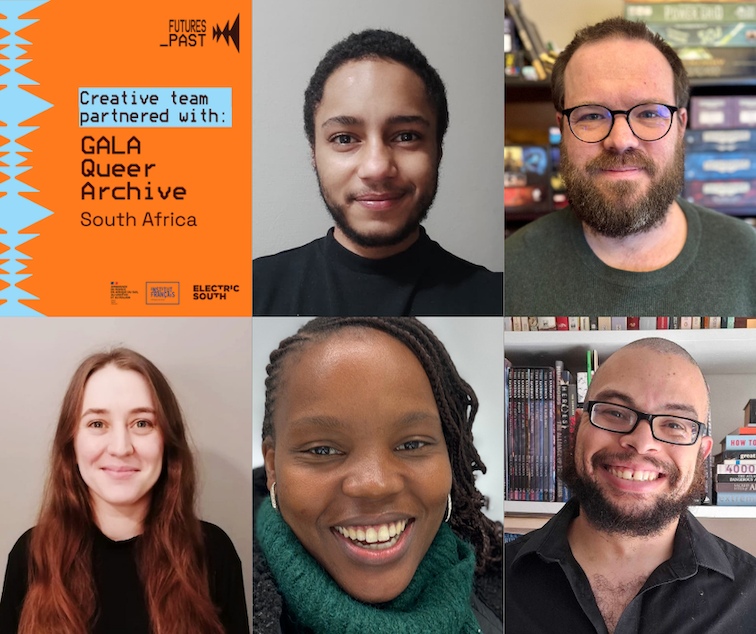
Focusing on the Township AIDS Project (TAP), founded in 1989, the project draws on archival material linked to figures such as Simon Nkoli. The creative team will create immersive, participatory experiences that transform the archive into a space of action, inviting audiences to engage in practices of care, memory, and solidarity rooted in queer activism and HIV/AIDS response.Artist team: Kieran Reid; Tiisetso Tsholofelo Dladla; Tim Flusk; Jordan Green; Kirsten Reid

Top row (L-R): Jordan Green, Kieran Reid Bottom row (L-R): Kirsten Reid, Tiisetso Tsholofelo Dladla, Tim Flusk

Iziko Museums of South Africa — Cape Town, South Africa
Water as memory, science, and spirit
Working with material linked to Iziko’s upcoming Amanzi eAfrica exhibition,  the creative team will develop an immersive project that explores water as a cultural, spiritual, and environmental force. Drawing on archives, oral histories, and ecological research, the work will invite audiences to engage with multiple perspectives on water, past and present.
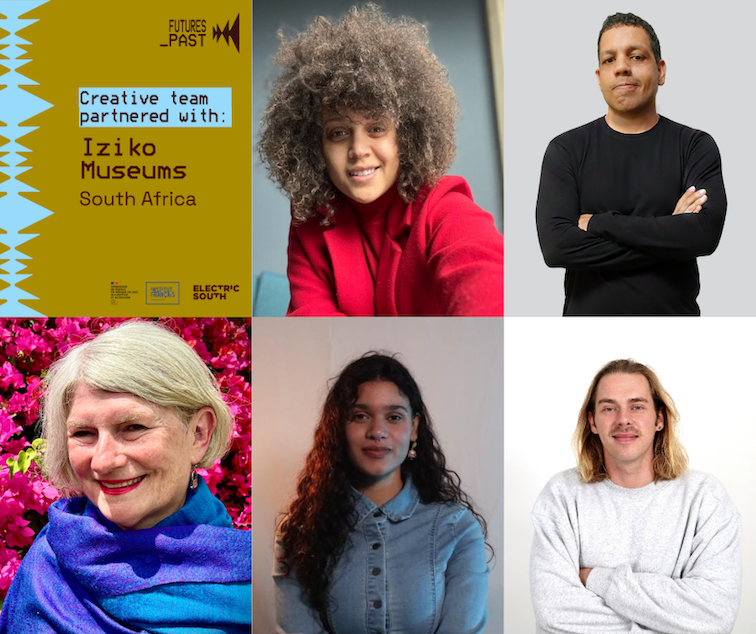
Artist team: Sarah Frances Summers; Desiré Laurent de Laroche Souvestre; Kyle Donald Marais; Reilly Robynn Cloete; Laurine Platzky

Top row (L-R): Sarah Frances Summers, Desiré Laurent de Larouche Souvestre Bottom row (L-R): Dr Laurine Platzky, Reilly Robynn Cloete, Kyle Donald Marais

Music Crossroads Malawi — Lilongwe, Malawi
Listening to endangered songs and oral traditions
The Music Crossroads Malawi Folksong Archive documents 217 traditional songs covering initiation, agriculture, spirituality, storytelling, and social life. Drawing on this rich heritage, the creative team will develop virtual and physical experiences that invite audiences to enter a living circle of storytelling. 
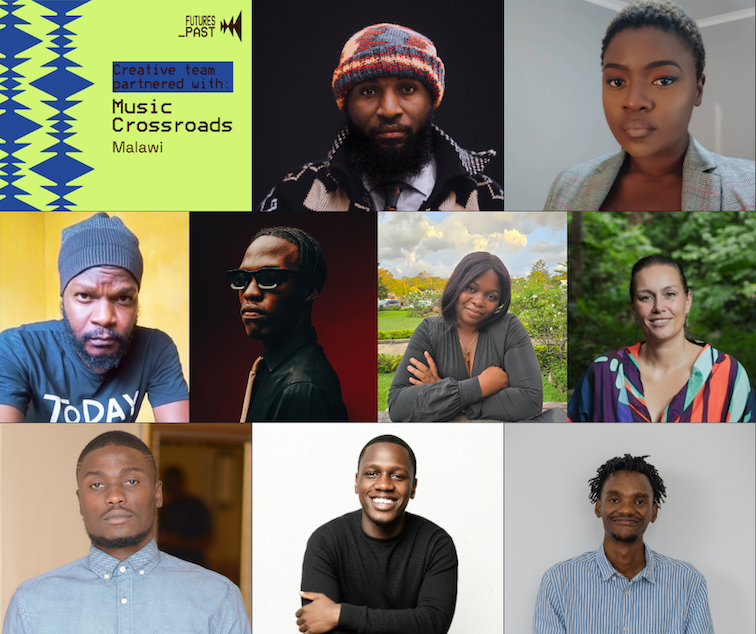
Artist team: Laura Schuerwegen; Matthew-Lusayo Chawinga; Roosevelt Kasimba Mwandira; Andrew Jere Kanthiti; Thandiwe Phiri; Chikondi Nkhoma; Christopher Ngalu; Kas Mdoka; Andrew Chilonga

Top row (L-R): Christopher Ngalu, Chikondi Nkhoma Middle row (L-R): Kas Mdoka, Andrew Chilonga, Thandiwe Phiri, Laura Schuerwegen Bottom row (L-R): Roosevelt Kasimba Mwandira, Matthew Chawinga, Andrew Jere Kanthiti

National Film, Video, and Sound Archives — Pretoria, South Africa
Reframing apartheid-era images
The Moolman Opnames collection comprises fourteen reels of 35mm film shot between 1960 and 1966. The footage documents everyday life and state activity during apartheid. The creative team will transform these archives into experimental 360°installations inviting audiences to interrogate what the images reveal and what they leave out.
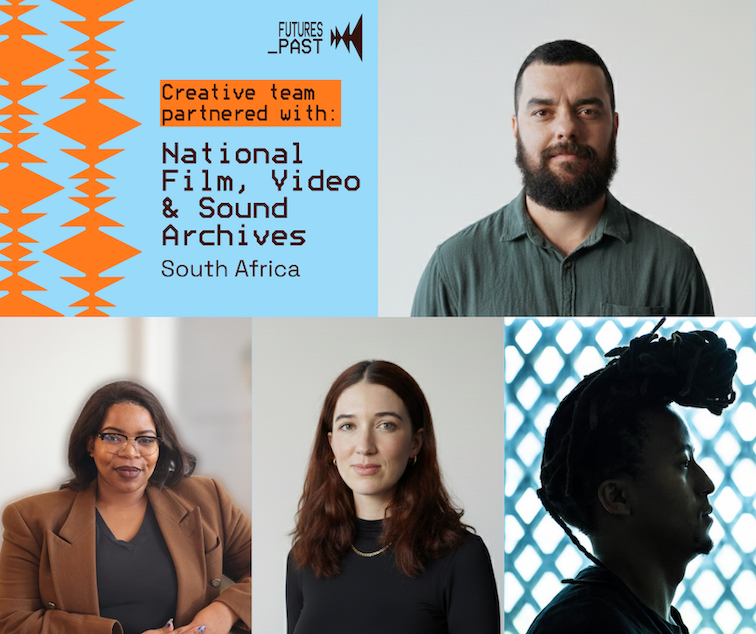
Artist team: Amy Louise Wilson; Francois Knoetze; Kaelo Molefe; Nomandla Vilakazi

Top row (L-R): Francois Knoetze Bottom row (L-R): Nomandi Vilakazi, Amy Louise Wilson, Kaelo Molefe

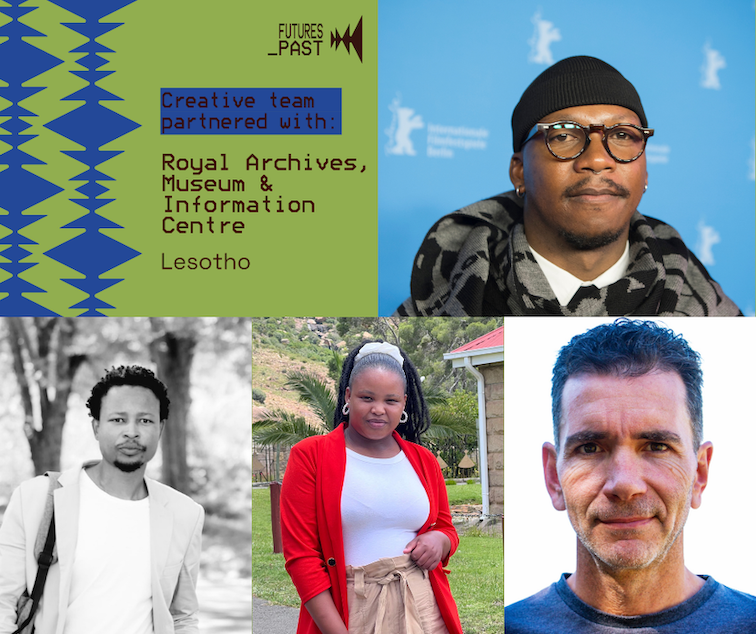
Royal Archives, Museum and Information Centre — Matsieng, Lesotho
Reimagining royal memory and national history
The Royal Archives preserve records central to the political history and cultural heritage of Lesotho, including official correspondence, royal photographs, and audio-visual material. Drawing on these collections, the creative team will develop a 360° experience that traces the royal succession of Lesotho. The team therefore invites audiences to explore the intersections of monarchy, history, and heritage.
Artist team: Mokhethi Gilbert Phohlo; Phillip Leteka; Telmo dos Reis; Moleboheng Khothatso

Top row (L-R): Phillip Leteka  Bottom row (L-R): Mokhethi Gilbert Phohlo, Moleboheng Khothatso, Telmo dos Reis 

Each selected archive offers a window into stories of resilience, identity, and cultural memory, which the artists bring to life through immersive, participatory experiences.

Reflecting on the collaborative model, Ingrid Kopp, Director of Labs and Partnerships at Electric South explains: “These partnerships are not about overlaying technology onto archives, but about working with artists and institutions to find forms that respect the material and open new ways of participation  and understanding for the public. Immersive tools are used here as a means of interpretation and engagement rather than spectacle.”

The immersive exhibitions will open across Southern Africa from August to December 2026, offering audiences the opportunity to encounter history, memory, and creativity in entirely new ways. 

International mobility and professional training

Two members from each artist team, along with an archive representative, will travel to France in April to develop international relationships and partnerships. This mobility supports professional exchange and longer-term cooperation between Southern African and French cultural and creative sectors.

Emerging producers will also participate in a six-month structured training program, gaining hands-on experience in immersive storytelling, sound design, exhibition development, and archival interpretation. This holistic approach ensures the project not only revives archival knowledge but cultivates a new generation of creative professionals equipped to carry these stories forward.

Alongside the creative collaborations, Futures_Past includes the Immersive Arts Mapping Study, documenting the immersive arts landscape in South Africa, Lesotho, and Malawi, and identifying opportunities for support, training, and collaboration. Practitioners are invited to participate via the online survey link.

“Through this project, archives are no longer just repositories; they become spaces of experience, dialogue, and imagination,” says Sofia Saa, Regional Head of New Media, Film and Television at IFAS. “Audiences will not only see history, but step inside it, connect with it, and feel its resonance today. By situating artist teams in the countries of the archives, and including emerging producers in every stage, we are ensuring a truly local, collaborative, and forward-looking approach.”