Blog

We Are What Remains brings !Xun and Khwe linocuts into an immersive new exhibition at !Khwa ttu

An immersive exhibition honouring !Xun and Khwe memory

Yzerfontein, South Africa: What happens when a collection of linocuts, created by artists from communities displaced by war, is reimagined through animation, projection and sound? Audiences can experience this at We Are What Remains, an immersive digital art exhibition opening at !Khwa ttu San Culture & Education Centre in Yzerfontein, on the West Coast of South Africa, on 31 October 2026 - October 2027.

Visitors will be able to explore an immersive installation combining projected imagery, animation, spatial audio and sculptural elements. They will encounter linocut figures brought into motion through light, animations unfolding across surfaces, and optical illusions that create the impression of images suspended in space. Together, these elements offer new ways to engage with the artworks and the histories, memories and San cosmologies they reflect. We Are What Remains honours not only what has been lost, but also what has survived.
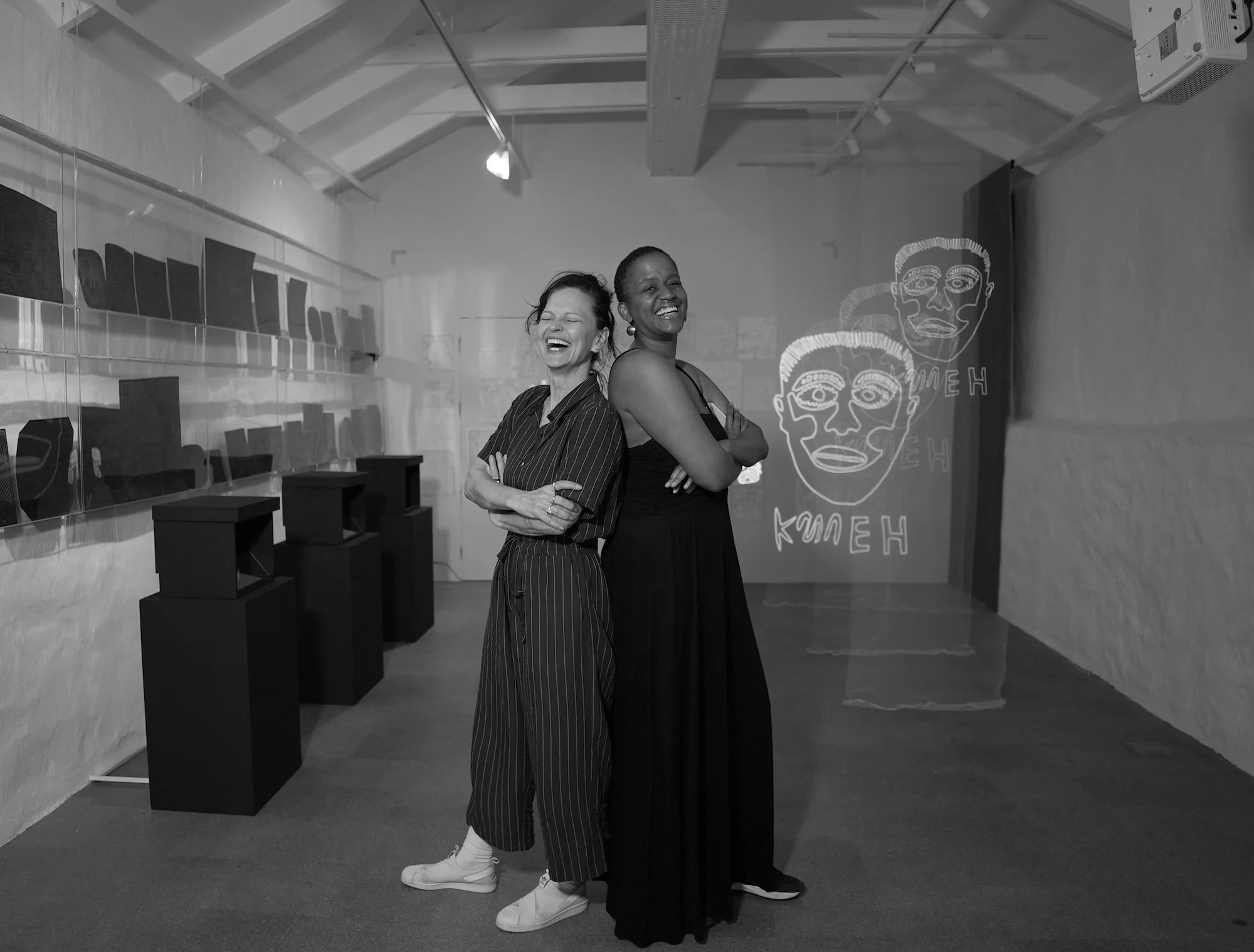
Inka Kendzia and Faye Kabali-Kagwa

At the heart of the exhibition is a collection of linocuts, prints made by carving designs into linoleum and transferring them onto paper, created by !Xun and Khwe artists during the 1990s and 2000s. The artworks emerged from a little-known chapter in southern African history. Following Namibia's independence in 1990, !Xun and Khwe communities, including former members of the South African Defence Force's 31 Battalion and their families, were relocated to Schmidtsdrift in South Africa. Originally from northern Namibia and southern Angola, the two distinct communities were brought together through displacement. The exhibition offers an opportunity to revisit this history through the artists' own perspectives, giving renewed visibility to their experiences, memories and cultural knowledge.

In 1993, an arts project initiated by Catharina Scheepers provided a space for !Xun and Khwe men and women living in Schmidtsdrift to create linocut prints. Working in makeshift spaces, the artists produced images reflecting experiences of war, displacement, community and longing for home, with each developing an individual style. Today, !Khwa ttu holds 600 original linocuts from the project, preserving an important visual record of the communities' histories and cultural knowledge.

“The significance of the linocuts lies in their ability to preserve and transmit cultural memory, inherited knowledge, oral tradition, identity, and resilience,” says Magdalena Lukas, Museum Curator at !Khwa ttu. “They are living archives of San worldviews, sustained through artistic practice rather than written record. For the !Xun and Khwe artists, the linocuts are a vital means of safeguarding endangered cultural knowledge and asserting continuity in the face of profound historical disruption.”
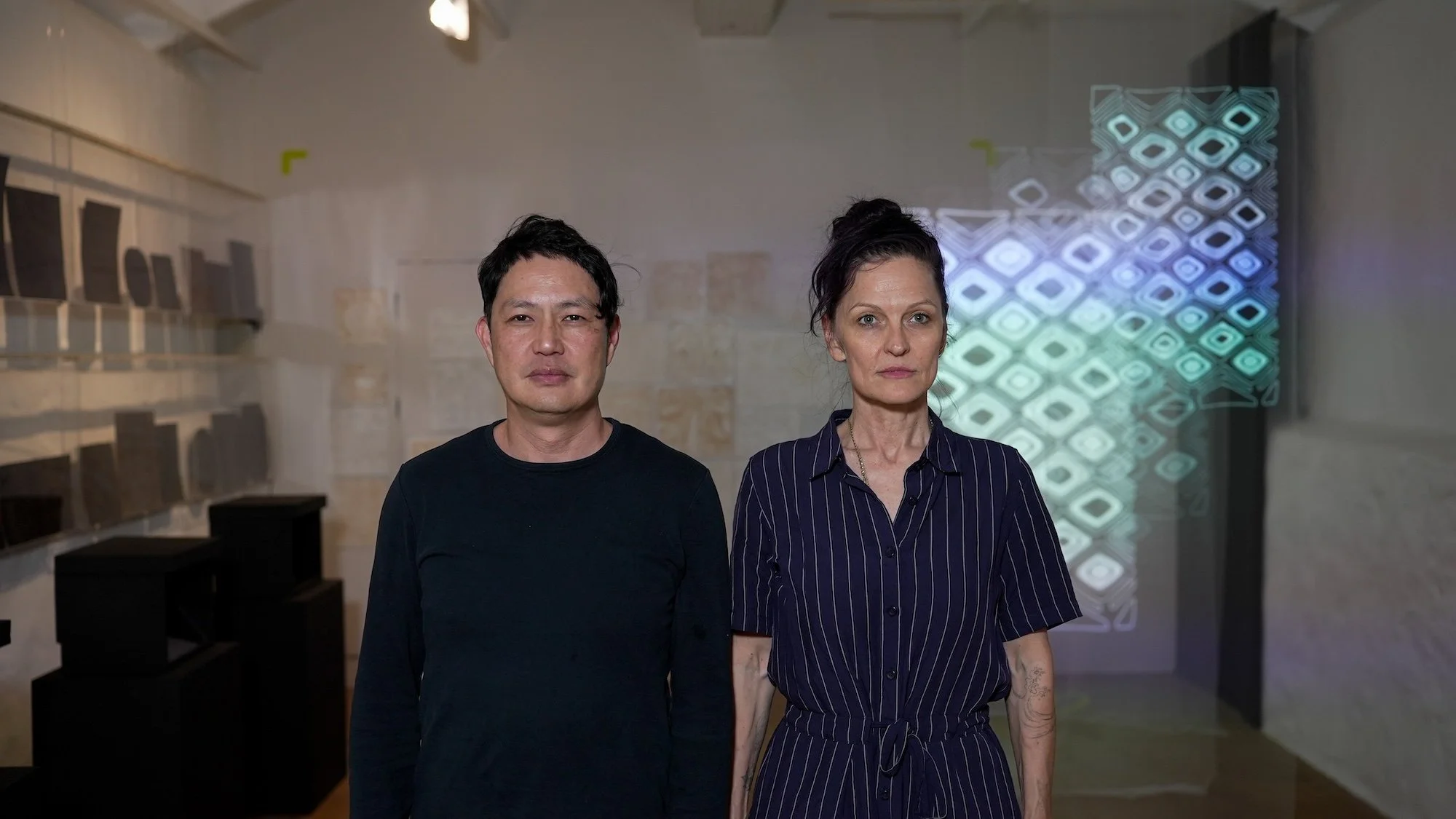
Mr Sakitumi and Inka Kendzia

For the original artists, the linocuts also represent a connection between generations and a way of passing on cultural knowledge. “We learned from our parents, and they learned from their parents, and we want our children to learn from us. Our forefathers created art and we are guided by our ancestors to create this art,” says Luhepu Kaheke, one of the original San linocut artists.

Developed by Open Draft, a South African creative company specialising in cultural curation and immersive design, in collaboration with !Khwa ttu and seven of the original artists, We Are What Remains combines the original linocuts with immersive technologies. The creative process has centred on the artists' experiences and individual forms of expression, exploring how their works can be interpreted in a new medium while remaining rooted in the original artworks. 

“Light, sound and movement bring the artworks to life through immersion and projection mapping,” explains Inka Kendzia, Co-Director and Creative Technologist at Open Draft. “We wanted the artists' own voices to come through,” adds Faye Kabali-Kagwa, Producer and Co-Director at Open Draft. “All the artists have shared experiences, but the creative expression is unique and particular to each artist.”
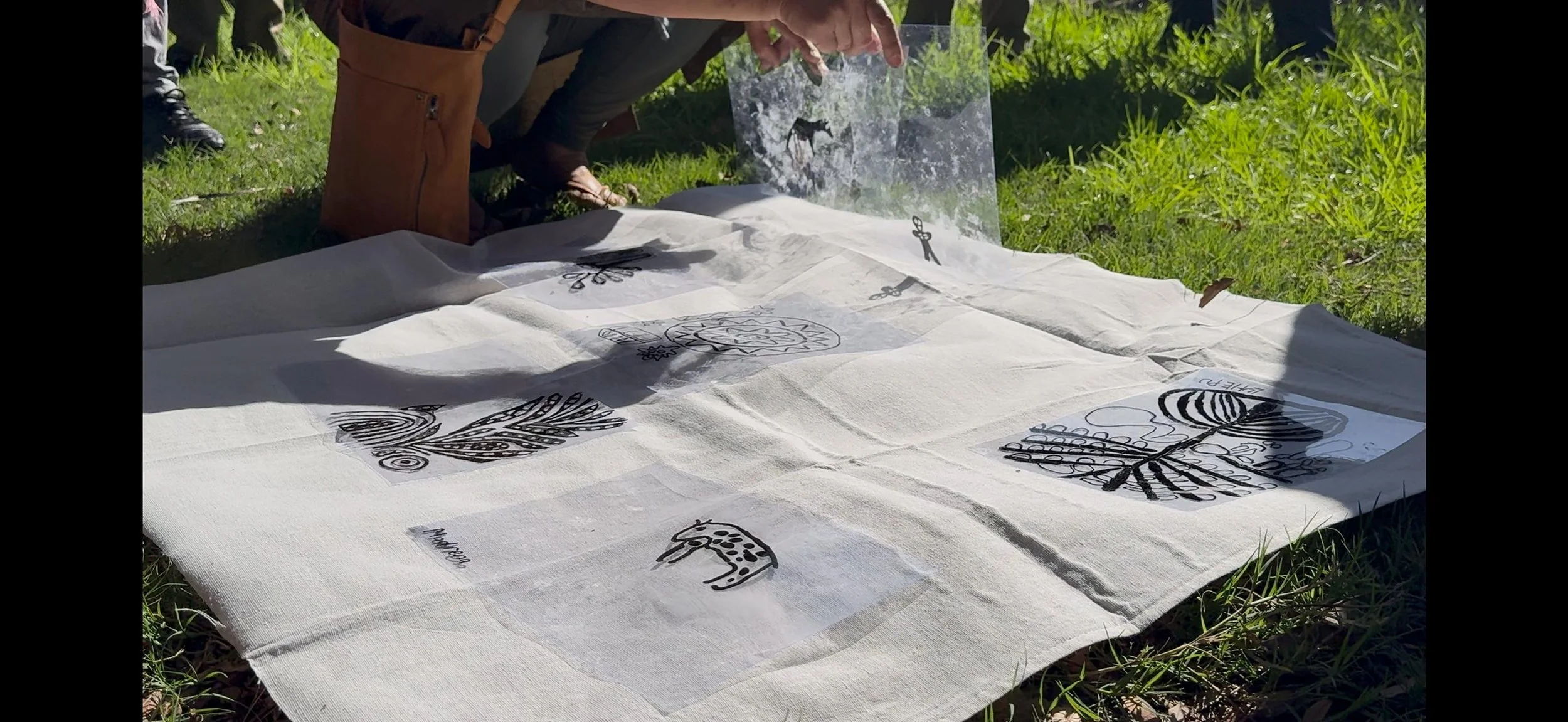
Shadow play with figures drawn on acetate

We Are What Remains is the third of six exhibitions developed through Futures_Past: Amplifying Memory with Immersive Technologies, an initiative of the Embassy of France in South Africa, Lesotho and Malawi and the French Institute of South Africa (IFAS), in partnership with Electric South and funded by the French Ministry for Europe and Foreign Affairs. The programme brings together creative teams and archives across the three countries to co-create immersive works that offer new ways for audiences to engage with historical collections.

“At !Khwa ttu, the linocuts are not simply objects to be preserved. They are living testimony,” says Sofia Saa, Regional Head of New Media, Film and Television at IFAS. “By working alongside the artists and the community, this project shows how immersive tools can help audiences step into history with care and respect, and feel why these stories still matter today.”

Event details

We Are What Remains – Immersive exhibition

Exhibition dates: 31 October 2026 – October 2027

Venue: !Khwa ttu San Culture & Education Centre, R27, Yzerfontein, Western Cape, South Africa

Entry to the museum: R130
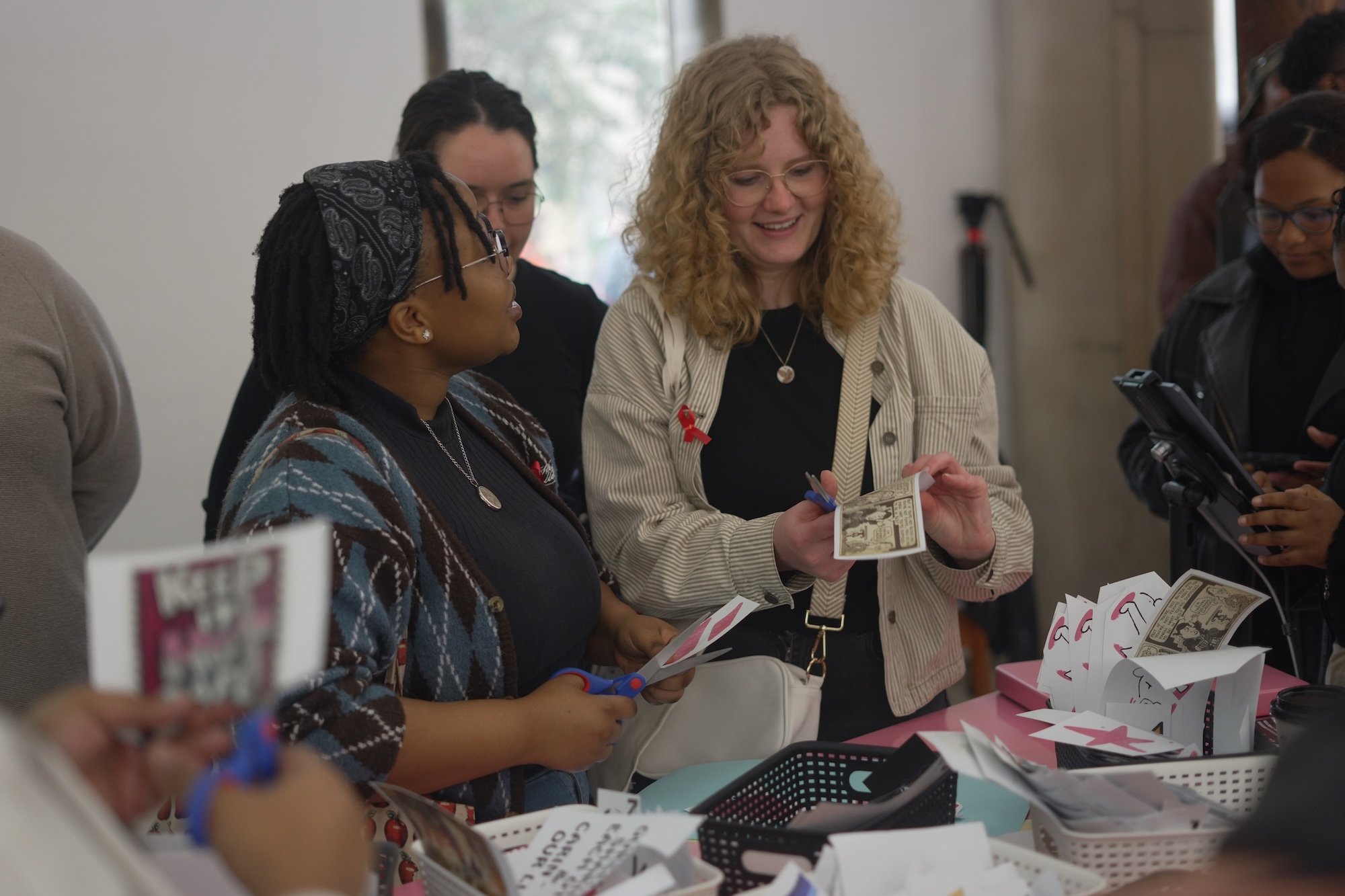
CAMP x GALA Queer Archive Host Protest Poster Making Workshop Inside Immersive Exhibition Acts of Care

Johannesburg: This Pride Month, audiences are invited to do more than look at history, by joining in a workshop to add their voices to the Acts of Care exhibition’s living poster wall. 

CAMP (Community Art Mobilisation Project) in collaboration with GALA Queer Archive, will host a Protest Poster Making Workshop inside Acts of Care, the immersive exhibition currently running at Latitudes Centre for the Arts (LCA) in Johannesburg.

In the 1990s, the Township AIDS Project (TAP) made its own posters, banners and pamphlets to say things, and share information that was not being shared anywhere else. Those materials, held by the GALA Queer Archive, are on the walls at Latitudes now as part of Acts of Care, an Extended Reality (XR) exhibition that explores how communities in the early 1990s Johannesburg and Soweto organised care, education and advocacy during the HIV/AIDS crisis.

“This free three-hour workshop asks participants to look closely at how an earlier generation put a message into public space, using paint, scissors and slogans, and then make something of their own about what needs to be said now,” explains Acts of Care Artistic Project Lead, Kieran Reid. “By making posters together, we hope to construct a collective memory. Each finished poster will join the exhibition’s living poster wall, and will remain in the archive.”

The workshop builds on the Acts of Care exhibition’s poster making station, where visitors design their own posters, physically or digitally, using visual assets from the TAP and GALA archive. Completed works are pasted and projected onto a growing shared wall that evolves throughout the exhibition’s run.

“Our creative team will be on hand to guide, support and advise on what promises to be a meaningful experience,” says Reid.

“We don’t want to simply document TAP’s history, we wanted people to feel what it meant to organise care under pressure, without a manual, without institutional support, and often without the language to name what was happening,” says Linda Chernis, Archivist, GALA Queer Archive

The workshop also speaks to the present. As international HIV/AIDS funding, including support previously channelled through PEPFAR, faces cuts that are affecting clinics, community health workers and prevention programmes across South Africa, Acts of Care insists that the community-led practices of care pioneered by TAP remain relevant today. 

The workshop is designed for anyone with something to say. No art experience is required. Because the session involves paint and other art-making materials, participants are encouraged to wear comfortable clothing and shoes they don’t mind getting messy.

Acts of Care is one of the projects in Futures_Past: Amplifying Memory with Immersive Technologies, an initiative of the Embassy of France in South Africa, Lesotho and Malawi and the French Institute of South Africa (IFAS), in partnership with Electric South, with funding from the French Ministry for Europe and Foreign Affairs.

Workshop details

Workshop: Protest Poster Making, CAMP x GALA Queer Archive, inside Acts of Care
 When: Saturday 31 October 2026, 10:00–13:00
 Where: Latitudes Centre for the Arts, 12 Hope Rd, Mountain View, Johannesburg
 Cost: Free (Max 20 people)  Age: 16+
 Booking essential: https://www.quicket.co.za/events/364286-protest-poster-making/#/

Acts of Care Exhibition runs until 1 December at Latitudes Centre for the Arts, and is open Weekdays, Tuesday to Friday,  from 10:00 - 15:00, and on 28 November from 10:00- 13:00. 

More info : https://twonamegames.com/actsofcare/

Kings of Lesotho - The Royal Succession Story: Immersive VR Experience Brings Basotho Royal History to Life  

A ground-breaking virtual reality (VR) experience charting nearly two centuries of Basotho history is set to give audiences a first-of-its-kind experience of the Kingdom of Lesotho's story - not by reading about it, but by stepping inside it.

Kings of Lesotho - The Royal Succession Story is an immersive 360-degree VR experience that takes viewers on a cinematic journey through the history of the Basotho nation, from the founding of the kingdom by King Moshoeshoe I in 1824 to the reign of the current monarch, His Majesty King Letsie III, the ninth in the royal succession. This VR experience will be launched at the Royal Palace Banquet Hall in Maseru, Lesotho, on Thursday 17 September, with Their Majesties King Letsie III and members of the Royal Family, and invited guests. Thereafter, the experience will be open to the public to experience at the Alliance Française de Maseru (AFM), AFM Library, as well as through a series of free touring exhibitions at selected locations around the country.

Through 360-degree storytelling, spatial sound, archival references, traditional music, and historically inspired landscapes, the experience transports audiences into the living memory of Lesotho.

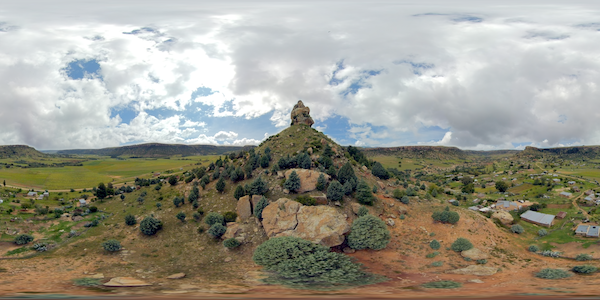
Still from the Kings of Lesotho VR experience of Mount Qiloane the famous conical mountain near Thaba Bosiu in Lesotho that inspired the design of the traditional Basotho hat, the mokorotlo.

"The core of the story begins atop Thaba-Bosiu Mountain, where an historic village, the stronghold of King Moshoeshoe I and the birthplace of the Basotho nation, is brought to life through everyday activities, oral storytelling, music, and historical narration. From there, audiences travel through significant royal sites and beautiful landscapes across Lesotho, including Menkhoaneng, Matsieng, Likhoele, Mokhotlong, Kome Caves, Katse Dam, ’Maletsunyane Falls, Makeneng, Phamong, and Makoanyane Square in Maseru. The journey introduces the life and contribution of each monarch in the royal succession while experiencing the country's natural beauty and cultural identity.

Kings of Lesotho is created in collaboration between the Royal Archives, Museum and Information Centre, in collaboration with MP Multimedia Pty Ltd, a dynamic creative-media company based in Lesotho that specialises in advanced multimedia production, digital storytelling, immersive visual experiences, and innovative content creation, with the Royal Archives providing the historical archival material and MP Multimedia developing and producing the virtual reality experience.

“This project has given us the chance to place our nation's history in front of audiences in a way that has never been possible before, using technology to honour our heritage rather than replace it,” says the artistic team’s Project Lead, Mokhethi Phohlo, of MP Multimedia Pty Ltd, "We hope every Mosotho who steps into this experience walks away with a deeper connection to where we come from."

“The Royal Archives exists to safeguard the history and heritage of royalty and chieftainship in  Lesotho for generations to come. Collaborating with MP Multimedia has allowed us to take those stories out from behind glass and archive boxes, and into a format that speaks to audiences today, while remaining grounded in the historical record. Importantly, the experience can also travel, allowing this history to reach people beyond the archive itself,” says Maneo Ralebitso, Project Lead, of the Royal Archives.

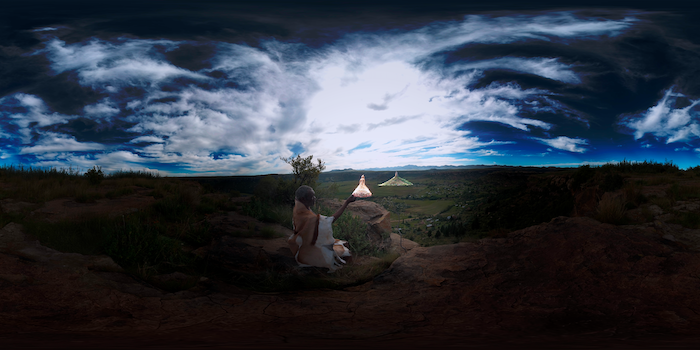
Still from the Kings of Lesotho VR experience – a Basotho man holds up traditional Basotho hat, the mokorotlo, in homage to Mount Qiloane the famous conical mountain near Thaba Bosiu in Lesotho that inspired the design of the hat.

Kings of Lesotho is one of six immersive works developed through Futures_Past: Amplifying Memory with Immersive Technologies, an initiative of the Embassy of France in South Africa, Lesotho and Malawi and the French Institute of South Africa (IFAS), in partnership with Electric South, with funding from the French Ministry for Europe and Foreign Affairs.

Futures_Past began in July 2025 and will run until March 2027 at venues in South Africa, Lesotho and Malawi. The project has brought together artist teams from the countries of six selected archives across South Africa, Lesotho, and Malawi, pairing each team with an archive to co-create an immersive digital work exploring the stories held within its collection. Together, the projects explore how immersive technologies can open new ways of encountering and sharing Southern African histories.   

“Kings of Lesotho is a powerful example of what Futures_Past set out to achieve: giving archives new life through the hands of local artists and technologists. Seeing this project reach the point of a launch at the Royal Palace, with the King and Royal Household present, is a testament to what is possible when heritage institutions and creative industries work hand in hand,” says Jean Spiri, Director of IFAS.

Electric South, Ingrid Kopp says, "Working with this project has been a privilege. It shows how immersive technology, when approached with care, can deepen rather than dilute our relationship with history. Kings of Lesotho is not just about looking back at the royal succession; it is about giving audiences, particularly young Basotho, a new way to feel part of that story."

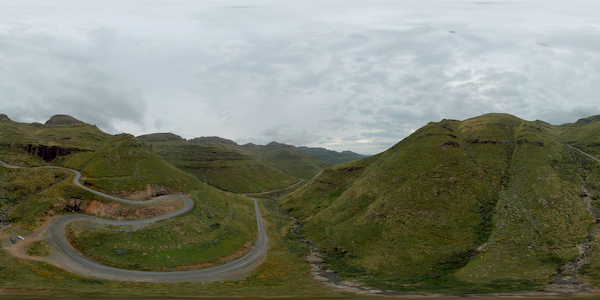
Still from the Kings of Lesotho VR experience – a drone shot of the dramatic Lesotho Highlands.

Kings of Lesotho is the second of six Futures_Past exhibitions and immersive experiences opening across South Africa, Lesotho and Malawi between September and December 2026.

The Official Launch, by invitation only, takes place on Thursday, 17 September 2026, at the Royal Palace Banquet Hall, Maseru. The launch will mark the formal introduction of the completed immersive experience before it opens to the wider public.

The exhibition will be available free to the public from 23 September to 4 December 2026 at the Alliance Française de Maseru (AFM), AFM Library. In addition to the main exhibition at AFM, the project will also undertake a series of free touring exhibitions at selected locations around the country.

Follow the Royal Archives, Museum and Information Centre on Facebook and @_mpmultimedia on Instagram for upcoming touring dates and locations, and to find out where you can experience Kings of Lesotho – The Royal Succession Story.

For further information on Kings of Lesotho, view their  website, and for the wider Futures_Past programme, visit https://www.futurespast.co.za/ 

IFAS to host High-Level French Film Industry Delegation in South Africa

This July, the French Institute of South Africa (IFAS) is bringing a highly esteemed delegation of twelve audio-visual professionals from France and the Reunion Island to South Africa under the banner of “New Shared Stories”. This is an endeavour to assist them to scout, network and develop relationships with the local film industry and stimulate cross-country collaboration and co-productions.

“In June 2023, an extended co-production agreement between South Africa and France entered into force. It is a unique agreement for France as it includes audiovisual co-productions. It is designed to encourage the creation of new content and narratives by expanding and stimulating co-productions between the two regions. It is a crucial step forward for new shared stories to be invented and for reciprocal investment and partnership,” says Ambassador of France to South Africa, Mr. David Martinon. 

This delegation follows a successful partnership between IFAS, the NFVF, and IDC which supported a visit of a South African delegation to the Series Mania Forum in France – the biggest series market in Europe, where the outcomes of this focussed effort led to successful business and networking opportunities for future audio-visual collaborations.

“The visit to South Africa has been built on the success of this, and together with local and French partners, we are excited to host twelve professionals who bring with them a variety of interests and expertise,” adds Mr. Martinon. 

In Cape Town, the delegation will visit Cape Town Film Studios, meet industry professionals, visit key locations, and attend the premiere of the film Pierre de Coubertin: An Olympic Life– about French educator Pierre de Coubertin, father of the modern Olympic Games.

Following this, the delegation will visit Durban to attend the Durban FilmMart, the annual business hub of the African film industry, and the Durban International Film Festival which celebrates its 45th edition this year and will also have a French Focus.

At the DFM, the delegation will participate in panels on animation, documentary and fiction film project pitches in the market’s Pitching Forum. In addition they will visit locations, network, and take business meetings with various other South African and African professionals, audiovisual agencies and commissions in attendance at the market.

The delegation includes:

Mounia Aram, who is President of Mounia Aram Company, specializes in entertainment and cultural exchange, develops innovative productions, and manages distribution as an agent.

Mathieu Ageron is the Deputy Managing Director, Co-Founder and Producer of Nolita which produces series, documentaries, dramas, music videos, and films for various platforms and channels.

Lynn Bou Malham is Head of Development of Federation Middle East Africa Caribbean (MEAC) a subsidiary of Federation Studios that creates and generates IPs from these regions, and produces high-end local films, TV series, and documentaries.

Emmanuel Eckert is Deputy Purchasing Director at Mediawan Rights, a leading audiovisual group in France and the second largest in Europe, with almost seventy production companies in 7 territories.

Frédéric Fiore is President of Logical Pictures Group which produces and co-produces, finances, and distributes films, series, documentaries, and commercials in France and internationally.

Michaël Gabrion is Producer at Gaumont Film Company, a French production and distribution company for feature films, television series, and animation programmes founded in 1895.

Benjamin Guéniot is a writer-director from Reunion Island with 15 years' experience of making TV series, commercials and short films in Reunion Island and Madagascar. Since 2023 he has been the founder of Storyto Films, an audiovisual and film production company.

Rémy Jacquelin is President of Paradoxal an audiovisual production company. He was responsible for theatrical distribution, international sales and the financing at Gaumont for ten years, and in charge of acquisitions of feature films and series at TF1 from 2000 to 2012. He joined Malberg Pictures and oversaw programme distribution and co-production and financing.

Morad Koufane is Director of International and Young Adult Fiction at France Télévisions a public broadcasting group, France's No. 1 media company. His unit is responsible for acquiring foreign series, co-producing international series, and producing young adult series for the French market. 

Céline Leclercq is Head of the Co-production, Cooperation and World Cinema Department at CNC (French National Centre for Cinema and Moving Images), a public administrative body responsible for devising and implementing French government policy in the fields of cinema and other moving image arts and industries, in particular audiovisual, video and multimedia, including video games.

Jérémie Palanque is Associate Vice-President and Producer of Woooz Pictures which is particularly interested in creators and stories from the world, through international co-productions.

Abel Vaccaro is a director and a producer from Reunion Island who is currently the managing director of Wopé, a short films, documentary and institutional productions company focused on showcasing content from the island.

IFAS will further be supporting the development of pan-African talent through DFM’s Jumpstart programme, a vital incubator dedicated to providing aspiring filmmakers with essential tools and techniques for scriptwriting and project packaging hosted in partnership with Produire au Sud, the film industry market arm of Festival des 3 Continent, in Nantes France. Four projects from the continent have been selected to benefit from Jumpstart in 2024.

A French focus also features at the Durban International Film Festival, and includes documentaries and films such as Dahomey, All We Imagine as Light, and Four Daughters, co-produced with producers from around the globe.

The project is supported by the Ministry of Europe and Foreign Affairs and the French Institute, with IFAS and Alliance française in Durban as part of a strategy for the international export of cultural and creative industries. It also benefits from the support of the Reunion Island Film Commission.

For more information about IFAS go to www.frenchinstitute.org.za

 For more information about the Durban FilmMart go to www.durbanfilmmart.co.za

For more information about the Durban International Film Festival go to https://ccadiff.ukzn.ac.za/


-ends

Creatives Collaborate in Third Space for local audiences and National Arts Festival

The National Arts Festival (NAF) and the French Institute of South Africa (IFAS) with The Embassy of France to South Africa, Lesotho, and Malawi, present Third Space, a series of collaborative creative dance artworks at this year’s festival that celebrates its 50th edition from 20 to 30 June 2024.

Mozambican choreographer Janet Mulapha working with FATC

The project involves creative residencies accompanied by a series of workshops hosted by local arts organisations and guest choreographers, scenographers, and dancers, within three communities in Duncan Village in Eastern Cape, George in the Western Cape, and Emakhazeni in Mpumalanga.

“The project is an endeavour to renew audience interest- and stimulate dance-makers' creativity in the contemporary dance space in South Africa, while investing in high artistic values, facilitating cultural exchange between African countries and ultimately supporting local artists in rural and peri-urban areas” says Sophie Boulé, cultural attaché and deputy director at IFAS.

She adds, “contemporary dance is a sector of excellence in South Africa that is well recognized in France and has been supported by IFAS for nearly thirty years.”

The three new dance creations coming out of these residencies will be showcased first within the local communities, then at the National Arts Festival in June 2024 as part of the curated programme, with plans to help facilitate these being presented in other African countries, as well as marketed to international festivals.

“The Third Space is the possibility for something new to emerge, it’s a space for meetings  across social groups and function, it's about being and making together,” explains NAF Artistic Director Rucera Seethal. “As we celebrate our 50th anniversary of the National Arts Festival, in the 30th year of democracy, our Third Space project is an opportunity for us to take stock of where we are, create works from unlikely encounters, and take bold steps together which hopefully ring loud during but also far beyond this year’s Festival”.

Built on this concept, the Third Space Project brings together three arts organisations in South African communities to collaborate with African choreographers and set designers in creating a work: Gompo Community Arts Centre (East London), KUBU Collective (George) and Forgotten Angle Theatre Collaborative (Emakhazeni).

Gompo Community Arts Centre in a the new dance work “Golden City”

Coming out of the Gompo Community Arts Centre, the new dance work “Golden City” is choreographed by Mozambique’s Panaibra Gabriel Canda, one of the most influential choreographers in Africa with over 25 years of international experience.  He works with scenographer Elton Rafael David, a practising photographer and Digital Media Creative also from Mozambique, as well as the young and talented South African visual artist Bahle Menziwa, from Duncan Village.  These three artists have created a new work with Gompo Arts Centre affiliated dancers Yonela Tana Gobingca, Phumzile Zakaza, Simvuyele “SimzADV” Hala Kamva Muti, Owen King, Unathi Xenti, Nosphiwo “Nickita” Kungeka and Sibongile “Queen Bee” Stevens.  


KUBU Collective - Lilian Maximillian Nabaggala (Choreographer), Jaime-Lee Hine, Amy-Kay Klassen and Lynette du Plessis (Front)

From George in the Western Cape, new dance work “Bond-Edge” features creatives and dancers from the KUBU COLLECTIVE working at The Market Community Theatre under the facilitation of local creative producer Heloïne Armstrong. The Collective is a multidisciplinary creative ensemble of performance and visual artists, writers, theatre-makers, technicians, and arts administrators. Ugandan choreographer and 2022 Pina Bausch Fellow, Lilian Maximillian Nabaggala, and Tanzanian multidisciplinary scenographer, digital artist, and Prince Claus mentorship award recipient, Arafa C Hamadi have been working with . The KUBU COLLECTIVE dancers Lynette Du Plessis, Jaime-Lee Hine and Amy-Kay Klassen on this new production.


FATC in rehearsal for their new dance work “In(Visible)”

The Forgotten Angle Theatre Collaborative is an independent dance company based at the Ebhudlweni arts centre in Emakhazeni, Mpumalanga. Dancers from the company Kaldi Makutike, Promise Mosoma, and Promise Magopa have worked with Mozambican choreographer Janet Mulapha and South African Jenni-Lee Crew to create the new dance work “In(Visible)”.  From Mozambique, Mulapha has an international profile as well as a long relationship with the Forgotten Angle Theatre Collaborative, while South African scenographer Jenni-Lee Crewe, is currently a senior lecturer in scenography at the Centre for Theatre, Dance and Performance Studies at the University of Cape Town.  

Dates for the local performances are:

KUBU COLLECTIVE: George – 1 June at 7pm. . For more info contact Heloïne Armstrong - heloinearmstrong@gmail.com

FATC: Emakhazeni – 9 June at 1pm. For more info contact  Tshego Khutsoane - tshego@forgottenangle.co.za

GOMPO: Duncan Village –23 June 1pm.  For more info contact Wandile Ntlanganiso - wandilefinearts@gmail.com


Dates for National Arts Festival are:

The Forgotten Angle Theatre Collaborative -  20 and 21 June

Gompo Community Arts Centre – 27 and 28 June

KUBU COLLECTIVE – 29 and 30 June

Show times and bookings for all three shows at the Festival can be made at https://tickets.nationalartsfestival.co.za/en?title=&programme_type_id=10&genre_id=&date=