Blog

World Environment Day (5 June): a South African programme is changing how the tourism industry thinks about its impact

A South African-led initiative is redefining what it means to be a responsible traveller and it’s not about skipping the trip.

DURBAN, 1 June 2026:  With World Environment Day observance on June 5, tourism and travel will no doubt be top of the list of discussions around its impact on the environment and climate change. Down on the southern tip of Africa, a quiet yet significant shift is underway, changing how the tourism industry thinks about its impact

A pioneering pilot programme led by travel company kimkim, in partnership with the Wilderness Leadership School, ETC Africa, and The Eco Travel Boutique, is helping 25 South African tourism properties measure, understand, and reduce their carbon footprints and giving travellers the tools to make their trips count for more.

South Africa’s wild landscapes are doing more than they look like they’re doing. For example, the Kruger National Park alone, roughly the size of Wales, or the state of New Jersey stores hundreds of millions of tonnes of carbon in its soils, trees, and grasslands. These ecosystems are functioning climate infrastructure, and they depend on communities having a tangible economic reason to protect them. Ethical tourism, structured to channel real revenue into local employment and conservation, is one of the most effective tools for ensuring that reason exists. The question isn’t whether to visit, it’s whether your visit makes the place stronger.

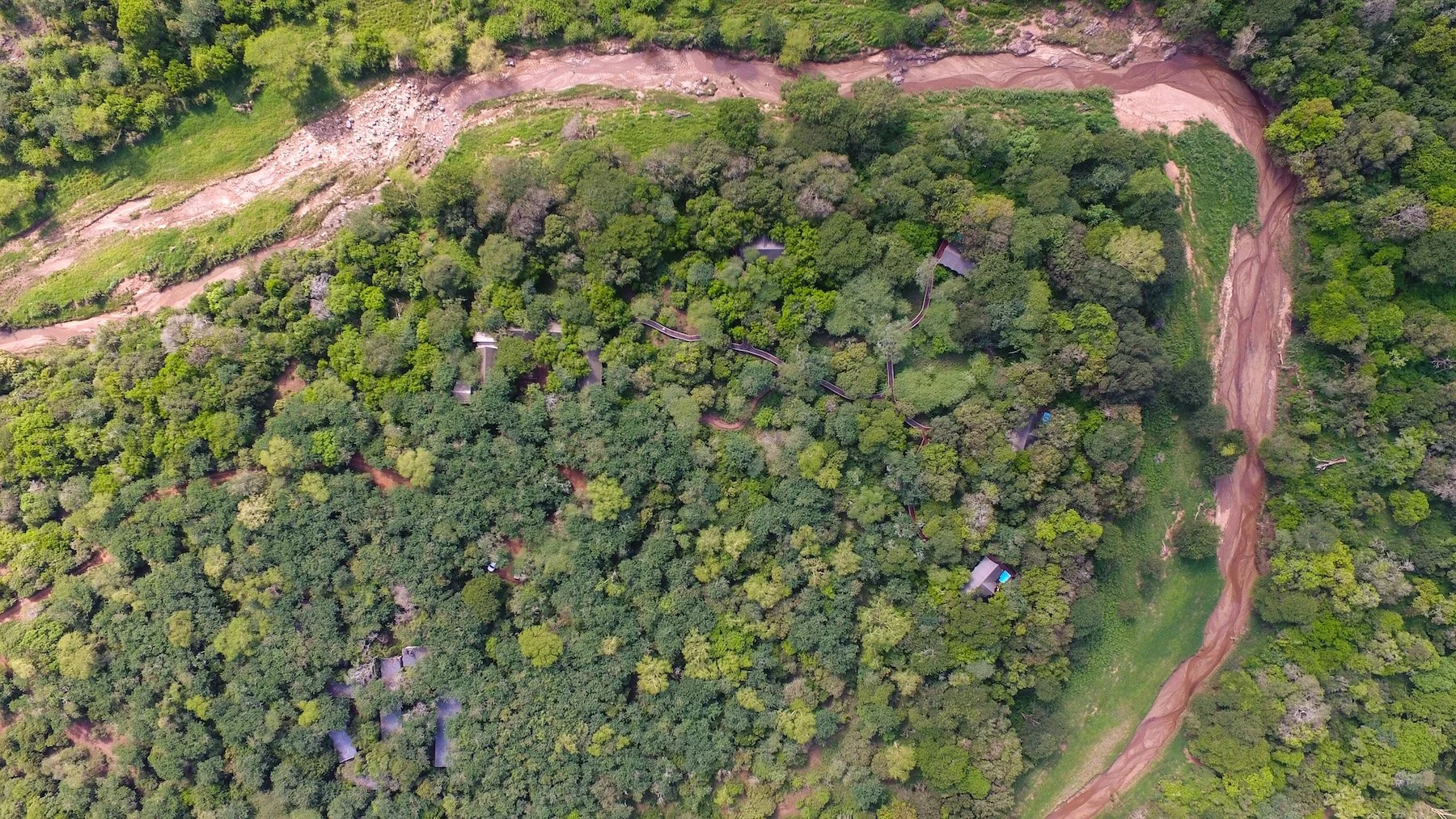
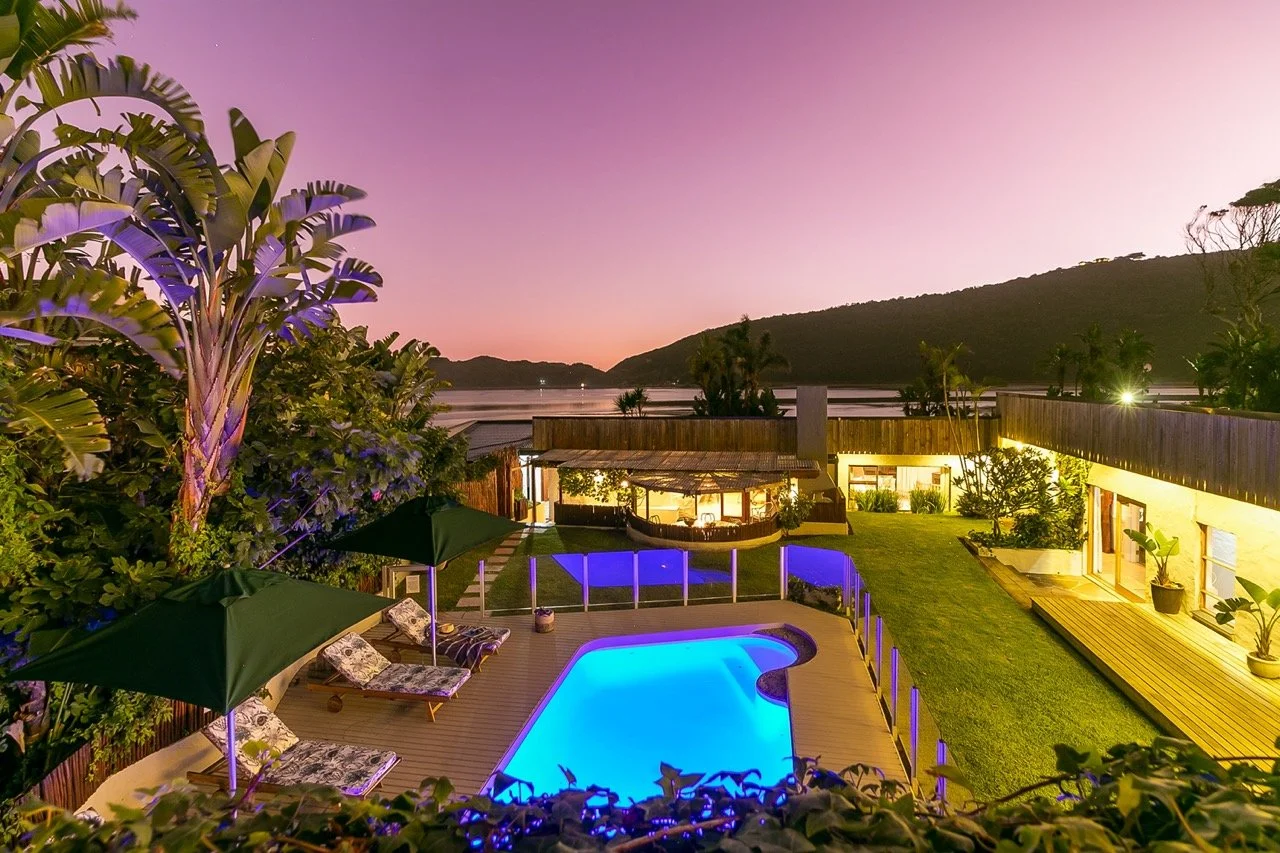
Rhino Sands: Nestled within pristine riverine forest and thoughtfully designed to minimize environmental impact, Rhino Sands blends into the natural landscape, offering an immersive wilderness experience while helping to protect the delicate ecosystems that make the African bush so extraordinary. Credit Rhino Sands

“The greatest environmental challenge isn’t travel it’s disconnection,” says Duncan Pritchard, Director of ETC Africa. “When guests witness wildlife, engage with local communities, or simply stand in a wild place, that’s when real conservation commitment takes root. Measuring a property’s carbon footprint gives that commitment a measurable backbone and the early data from this pilot has been revealing. Off-grid properties are achieving, on average, half the per-bed-night emissions of their on-grid equivalents. And across the programme, properties that actively measure and manage their footprint are seeing emissions reductions of more than 20%  not through radical overhaul, but through the simple discipline of paying attention.”

“Our goal with every traveller is to help them connect to the community and culture of their destination,” says Kaelyn Harris-Vincent, Brand Marketing at kimkim. “When tourism is done thoughtfully, it really can be a force for good. By year’s end, every participating property will carry Verified Impact branding  so travellers can see exactly what their stay is contributing to.” 

Programmes like this one can only do so much. The properties are doing the work, measuring, reducing, verifying. But the traveller is the other half of the equation. And the most impactful choices available to guests are often the least obvious ones.

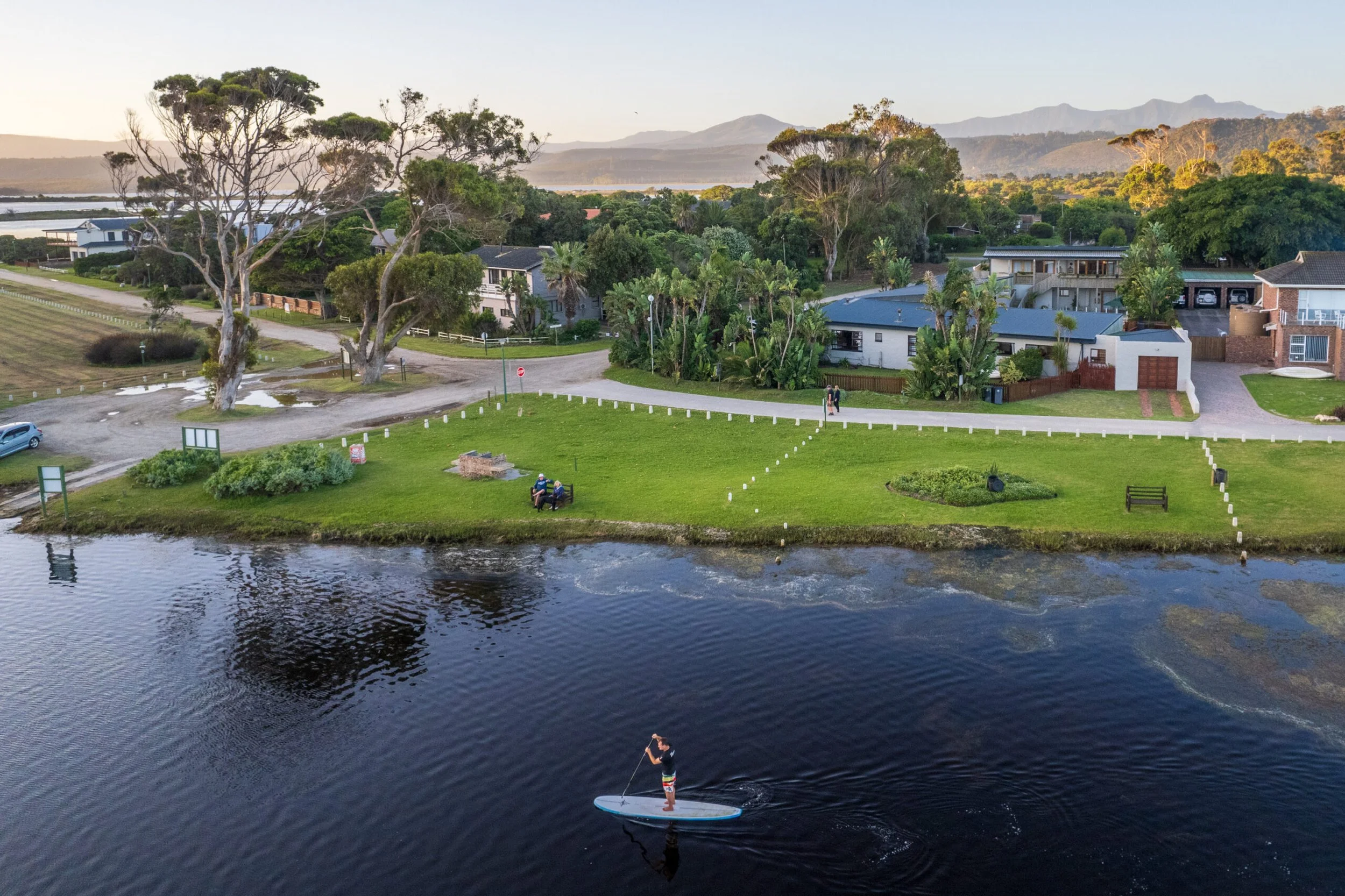
In Toto Retreat: At properties such as In Toto Retreat on the Garden Route, sustainability is embedded in everyday operations, where small, thoughtful decisions combine to create a measurable positive impact for both people and the planet. Credit In Toto Retreat

Eight Things Most Travellers Never Think to Do (But Should)

Beyond the basics, here’s what the most impactful travellers actually do differently:

1.    Ask where the food comes from. Food transport accounts for more than 10% of total greenhouse gas emissions at most remote safari properties. Ask whether produce is sourced locally and know that locally raised meat can have a lower carbon footprint than vegetables flown in from overseas. Local sourcing matters more than the type of food on the menu. Properties that can answer this question fluently are usually the ones worth staying with.

RHINO SANDS: LOCAL FOOD, LOWER FOOTPRINT: Choosing locally sourced food is one of the simplest ways travellers can reduce their environmental impact. Produce and ingredients grown or raised close to a destination require less transport, helping to lower emissions while supporting local farmers and communities. Photo Credit: Rhino Sands

2.    Skip the safari wardrobe. The fashion industry produces more carbon emissions annually than international aviation and shipping combined. Buying an entirely new wardrobe for a two-week trip, a habit that safari-outfit content has quietly normalised can rival the footprint of the flight itself. Pack what you have. Neutral tones are already in most wardrobes. The wildlife doesn’t care about the brand.

3.    Flag dietary requirements weeks before arrival, not at check-in. Remote safari camps often sit hours from the nearest town. A last-minute dietary request can mean a 200 km round trip for a single ingredient; unnecessary emissions, unnecessary cost, and a flustered kitchen. Tell them at booking. Good operators will be grateful; great ones already ask.

4.    Ask for a guide with roots in the area. A guide who grew up in or near the area brings a depth of knowledge that no training programme fully replicates,  the seasonal patterns, the local history, the sounds that don’t appear in field guides. Request one specifically. And when you tip, tip generously: that money enters a local economy directly.

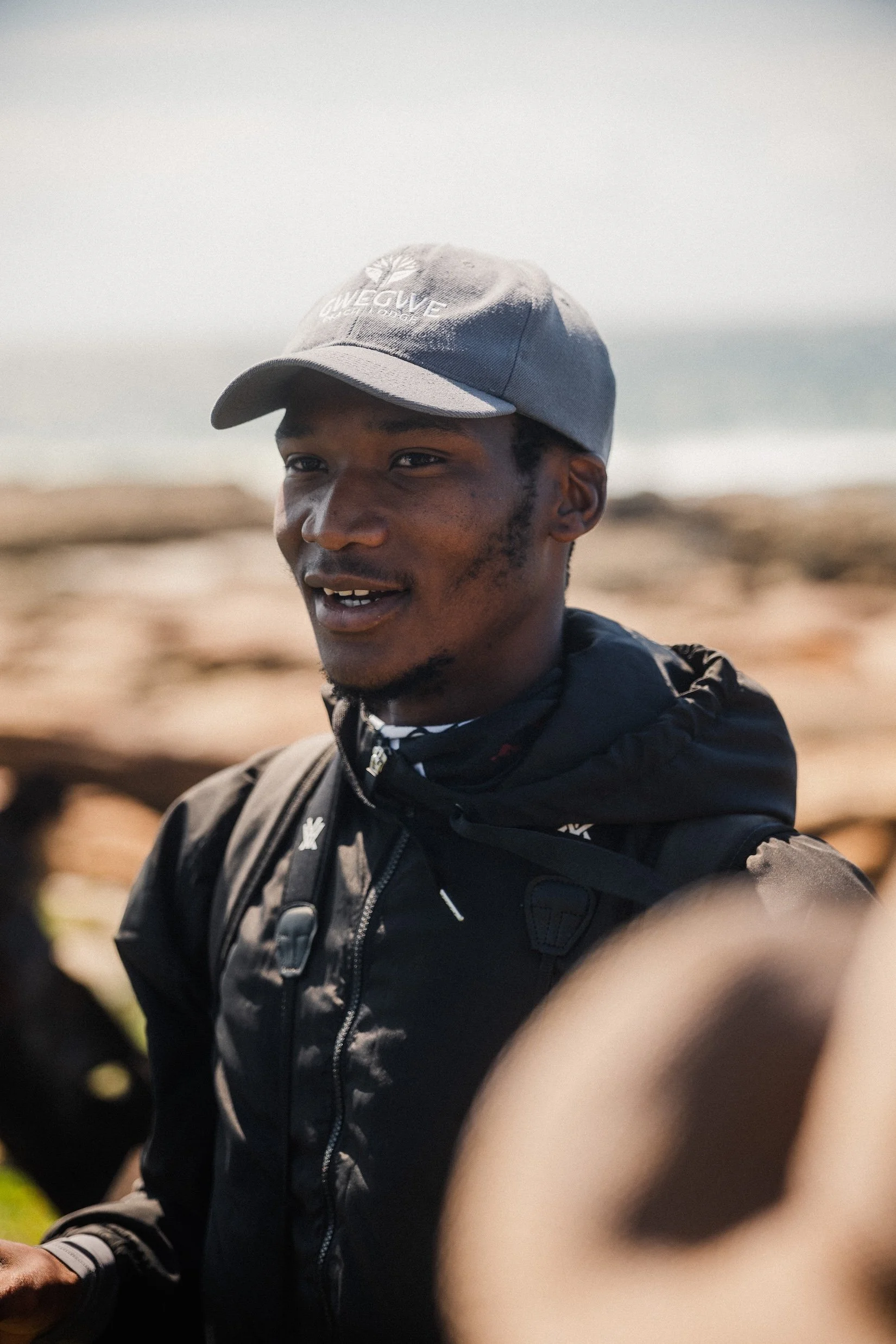
Gwegwe guide:  LOCAL KNOWLEDGE MATTERS
Guides who have grown up in or near a destination offer visitors unique insights into local culture, history and wildlife. Supporting local guides helps ensure tourism benefits communities directly and meaningfully. Pictured here is Asanda Phiwani, a local Pondo guide that shares his knowledge of the natural world as well as local history and culture at Gwegwe Beach Lodge. Photo credit: Gwegwe Beach Lodge

5.    Resist the urge to chase the next wildlife sighting. Game drive vehicles are typically the single largest source of carbon emissions at a safari lodge. Every unnecessary kilometre has a cost. More importantly, the guests who come home with the best stories are almost never the ones who ticked the most boxes, they’re the ones who sat at a waterhole for an hour, or followed a dung beetle across a road, or asked their guide to stop the vehicle and simply listen. Don’t push your guide to race between sightings or even better, request more walking safaris. The bush rewards patience in ways a highlight reel never captures.

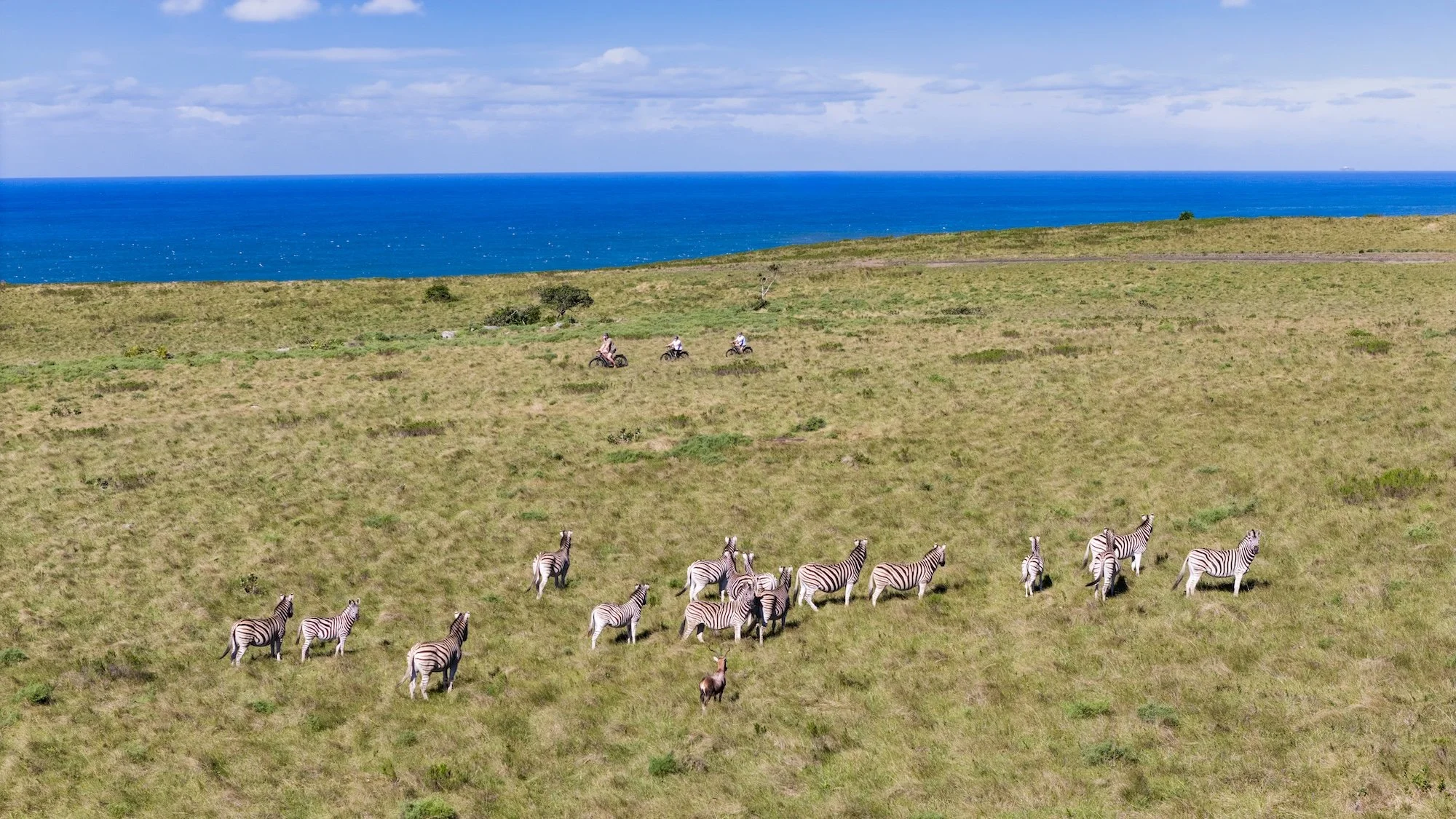
eBikes- a exhilarating alternative to game drives with zero fossil fuels. Photo Credit: GweGwe Beach Lodge

6.    Choose one longer trip over two short ones. The carbon cost of a long-haul flight is concentrated in take-off and landing. A two-week trip to Southern Africa carries a meaningfully lower emissions-per-day profile than two separate one-week visits. The experience is also categorically better, by day three, you’re no longer adjusting. You’re actually there.

7.    Ask about the property’s carbon programme before you arrive. Not every lodge that says ‘eco’ has done the work. Ask whether they track their emissions, whether those figures are independently verified, and what specific conservation projects your stay supports. Good properties will have real answers. Others will learn to.

In Toto Retreat: At properties such as In Toto Retreat on the Garden Route, sustainability is embedded in everyday operations, where small, thoughtful decisions combine to create a measurable positive impact for both people and the planet.

8.    Ask how you can leave more than you took. The best lodges will have answers ready: an anti-poaching initiative you can contribute to, a community garden project, a rewilding programme that needs support. Ask anyway, even if they don’t. The questions travellers ask are one of the most underestimated forces in this industry. Properties pay attention to what guests care about. If you ask, they notice. If enough people ask, things change.

The kimkim Climate Action Pilot Programme is implemented through the Wilderness Leadership School, with technical expertise from ETC Africa and market access supported by The Eco Travel Boutique. By the end of 2026, all participating properties that complete the programme will carry Verified Impact branding, providing travellers with transparent, independently verified sustainability credentials.

Green Corridors, ETH Zürich and Kimberly-Clark Collaborate to Tackle “Nappy” Waste Crisis in Durban Informal Settlements

In partnership with Swiss University ETH Zürich and Kimberly-Clark, Green Corridors, the NPO dedicated to environmental and social initiatives in Durban, earlier this year embarked on a groundbreaking project to address the pressing issue of dumped disposable nappies and other absorbent hygiene products (AHPs) such as panty-liners, wipes and sanitary pads in informal settlements.

Amina Keneta (Supervisor AHP Collections) at Johanna Road informal settlement, shows one of the dedicated AHP bins that has helped to lessen the impact of improperly disposed hygiene products on the community, environment and public health. Pic by Val Adamson

“Disposable AHP’s which are designed to absorb fluid, are made from plastic and other materials, posing a significant environmental challenge due to their non-biodegradable nature,” explains Green Corridors Green Spaces Project Officer, Musa Shange. “Their improper disposal leads to environmental contamination and health hazards, including the spread of diseases. These products, especially nappies, also often cause blockages within sewerage systems, which can result in sewerage overflow and contamination of waterways.” 

This Green Corridors initiative, known as the Inhlanzeko Bin Project aims to pilot an AHP collections system to lessen the impact of improperly disposed hygiene products on the community, environment and public health. The project has been rolled out in Johanna Road and Blackburn Village informal settlements, with trained community liaison officers participating in educating and guiding residents.  In most informal and rural settlements, the ‘normal’ option for nappies disposal by residents is nearby open dumpsites.

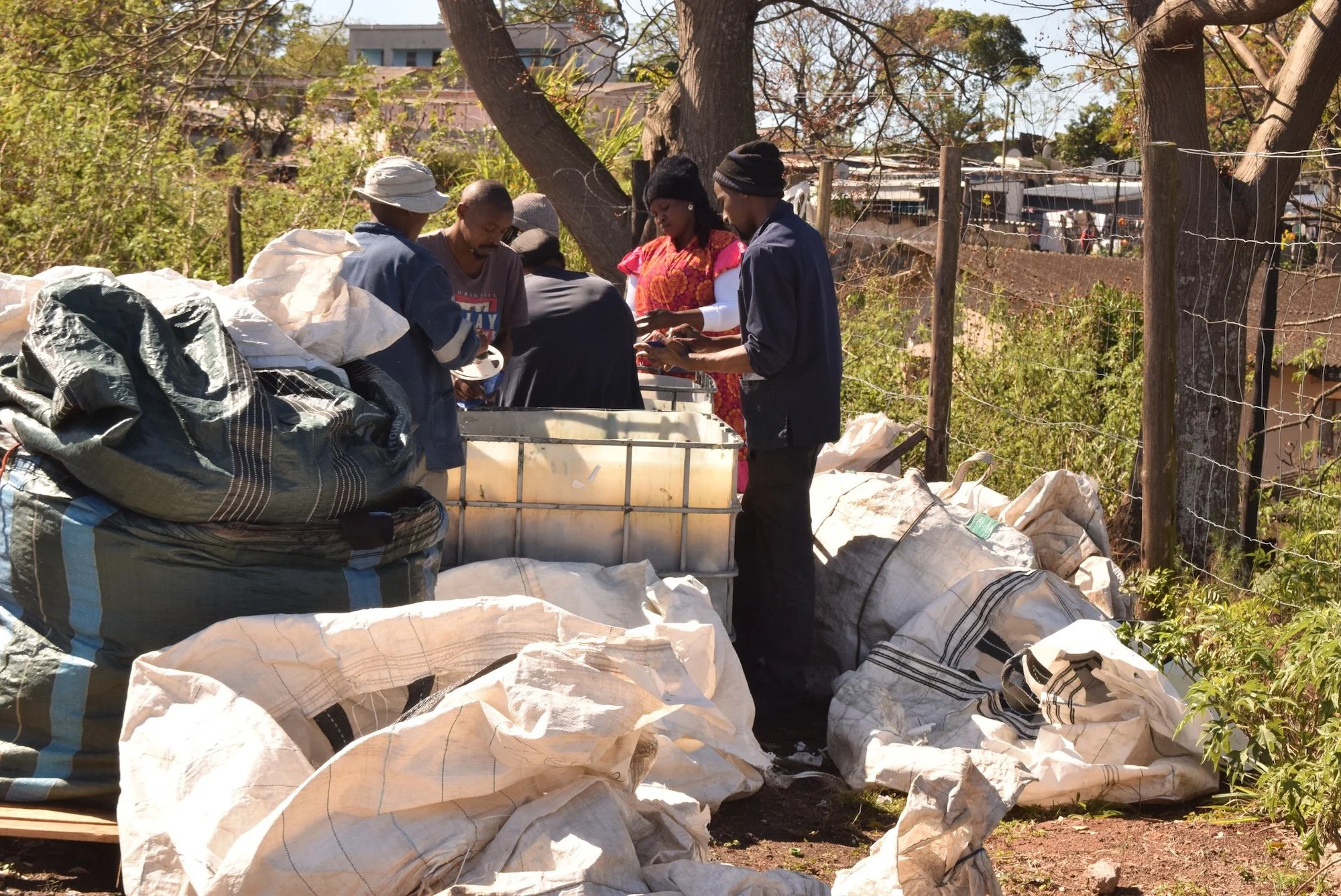
Specialized nappy bins have been provided in selected locations, ablution blocks and creches in these settlements. The bins have been managed by the three part time employed community members in each community. They encourage residents to dispose of nappies safely, collect, check and weigh the bagged contents from the bins, and remove the bags to temporary storage containers, for weekly collection by CSW contractors and disposal at registered landfill sites. 

The “nappy” bins are being trialled at the two settlements, and different methodologies for fostering change in disposing behaviour are being tested. This included providing incentives and training community field workers to conduct caregiver meetings, home visits, and creating online caregiver networks.

:Amina Keneta (Supervisor AHP Collections), with Nontuthuko Ncopheni (Field Worker), Martin Mekkattu Master’s student from the Department of Mechanical and Process Engineering at ETH Zürich (Switzerland), and Okuhle Mdutshane (former Field Worker in the  Johanna Road Informal Settlement.

Three Swiss Master’s students, supervised by Dr. Marc Kalina from the Department of Mechanical and Process Engineering at ETH Zürich, have been responsible for designing and implementing the collection system. The locations for the bins were mapped out by Engineering student Timo Stutz. Another engineering student Dominik Huber, planned and helped design and install the network of bins and their management for his Master’s thesis. While a third Master’s student, Martin Mekkattu, has been responsible for optimising and evaluating the implemented collection system.

As community engagement and education plays pivotal roles in driving behaviour change, the programme has trained local fieldworkers, over a couple of years, who conduct home visits and host meetings to raise awareness about the importance of safe AHP disposal. 

Communication tools such as WhatsApp messages, posters, and videos are being used to reinforce the message and engender personal responsibility.

Results show more than 1,000 kg of AHP waste collected monthly per community, with 93% purity of collected AHP waste.

“While challenges persist in applying integrated and effective waste management systems in Durban’s informal settlements, this Green Corridors project marks a positive step towards mitigating the AHP waste crisis in our informal settlements, alongside drives towards redesign for re-usable AHPs,” says Shange.  “We hope that by providing a well-managed case study with solid data, it lays a foundation for informing future strategies for safe and environmentally-friendly AHP waste disposal.”

For more information or to become involved in the Green Corridors AHP project contact Musa Shange, musa@durbangreencorridor.co.za

 More info about Green Corridors:  https://durbangreencorridor.co.za/


ENDS

Adventurer and Wildlife Filmmaker Josh Crickmay comes face-to-face with “City Beasts” in new series on People'sWeather


Exploring the wild side of Cape Town game ranger, and adventurer Josh Crickmay takes audiences on an exhilarating journey through the City's hidden treasures in the upcoming TV series City Beasts: Cape of Chaos on People'sWeather on Channel 180 DSTV and Openview Channel 115 beginning on 29 January.


City Beasts chronicles the journey of Josh Crickmay on a mission to find proof that humans and animals can coexist in harmony. Josh shares his experiences as he discovers these animals in a fun and educational way, imbuing the series with his unbridled enthusiasm and quirky sense of humour. Through tracking, trap cameras, stakeouts, and by following the tales from the locals, he encounters fascinating “beasts” of the City, uncovering their resilience, as they adapt and cohabit with humans, who have increasingly claimed their spaces.

Through honest and genuine encounters with animals like penguins, sharks, porcupines, baboons, genets, and even otters, he proves his theory that not only do people coexist with wildlife in Cape Town, but he also discovers the remarkable impact it has on the locals.

Josh’s passion for wildlife was ignited as a 15-year-old when as a lost and suicidal teen, he spent a “big year’ chasing down bird species in Southern Africa, the Andes, and the Amazon. Following this he produced a magnificent coffee table book: Josh’s Big Year, a photographic record of his experience. Josh qualified as a FGASA nature guide and became interested in creating content and started filming his experiences, uncovering his eccentric and often humourous slant on nature.

What attracted us to the City Beast series is Josh's unique, genre-bending approach to wildlife film-making. It’s off-beat, unusual, highly accessible and engaging,” says Stephan le Roux, owner and CEO of People’sWeather.  “He has created a fresh approach to an often serious genre that is desperately in need of some humour and young voices to broaden its appeal. Think Tik Tok by the waterhole!”

“Creating the City Beasts was the culmination of everything I love in life: Incredible wildlife, fascinating people, conservation, challenging filmmaking, pirate boats and unbridled havoc,” says Josh. “It was as every bit chaotic behind the scenes as it is on the screen, and I couldn’t have asked for better.”

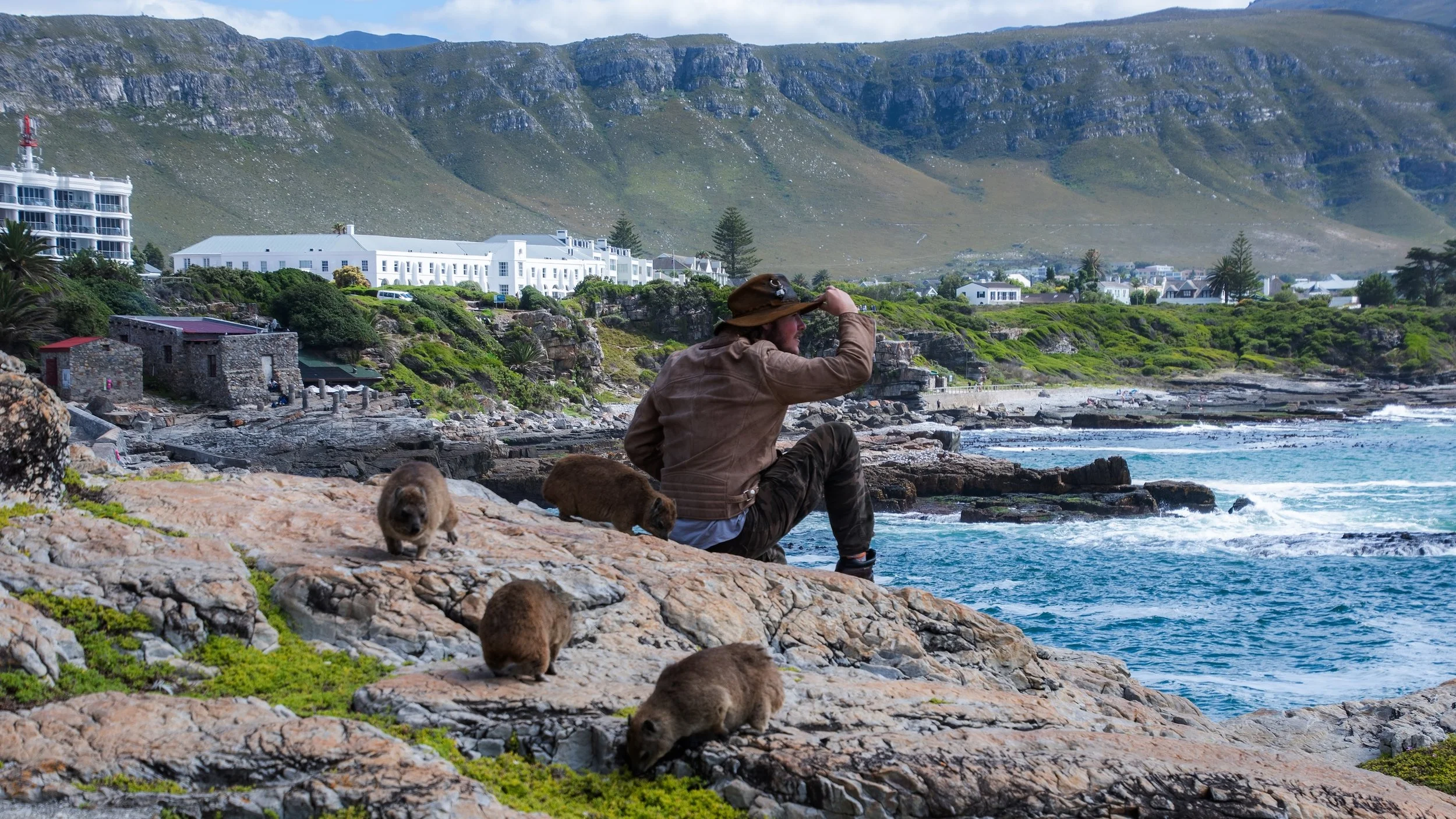
Josh’s enthralling adventures kick off with a welcome by Cape Town’s dassies. He follows baboons as they navigate the urban landscape and tracks down the four species of cormorants inhabiting the City, unveiling a stunning diversity of avian life. He takes a plunge into the depths of the kelp forests, learning to free dive to bring viewers face-to-face with the shark life beneath the waves. His encounters with the iconic seals of Cape Town, provide a rare glimpse into their daily struggles and triumphs in their natural habitat. He captures the goofy and lovable nature of African penguins. In a breathtaking exploration of shipwrecks off the Cape of Storms, Josh reveals how nature has ingeniously turned man's trash into treasure. He meets a Cape Clawless Otter under the docks of Simon’s Town harbour, searches the dangerous gorges of Table Mountain for the extremely elusive and aptly named ghost frog, and has a memorable experience with a pair of porcupines. Josh also shares his personal story of struggle and success with Autism Spectrum Disorder, as he explores sundews and seabirds and searches for an elusive otter.

It's no wonder that Josh feels that creating City Beasts is a kind of tribute to the Natural World - as it literally saved his life. Josh's curiosity, sheer bravery, and clever sense of humour make him an endearing character, and his passion is undeniably authentic and palpable throughout the series. “My every step forward is an attempt to repay that debt back to the Natural World, through conservation, spreading knowledge and excitement about our world through film - told with humour, adventure, and as always, mayhem.”

Catch this uniquely captivating series on People'sWeather on Channel 180 on DSTV and Openview Channel 115 from January 29 to 8 February at 20:30 with repeats.

To watch trailer: https://www.youtube.com/watch?v=H9UBn5T1_n4

For more information go to https://www.peoplesweather.com/.

For more info on Josh Crickmay go to www.Joshcrickmay.com[KC2]